
Approach
Designing responsibly — for the land, the climate, the resources, and the ecosystems that make each site what it is.
Sustainability is not a checklist. It is the natural outcome of designing honestly with climate, site, and place.
Costa Rica demands it. High rainfall, intense solar radiation, salt air, steep topography, fragile ecosystems, and rich biodiversity mean that every design decision carries environmental consequence. Our response is to treat sustainability as a foundation — worked into the architecture from the first site analysis, not layered on at the end.
We work across passive building science, water strategy, responsible material selection, energy-efficient lighting, and ecological landscaping. Where projects call for it, we support clients through third-party certification processes including WELL, LEED, and EDGE.
01 — Passive Design & Building Science
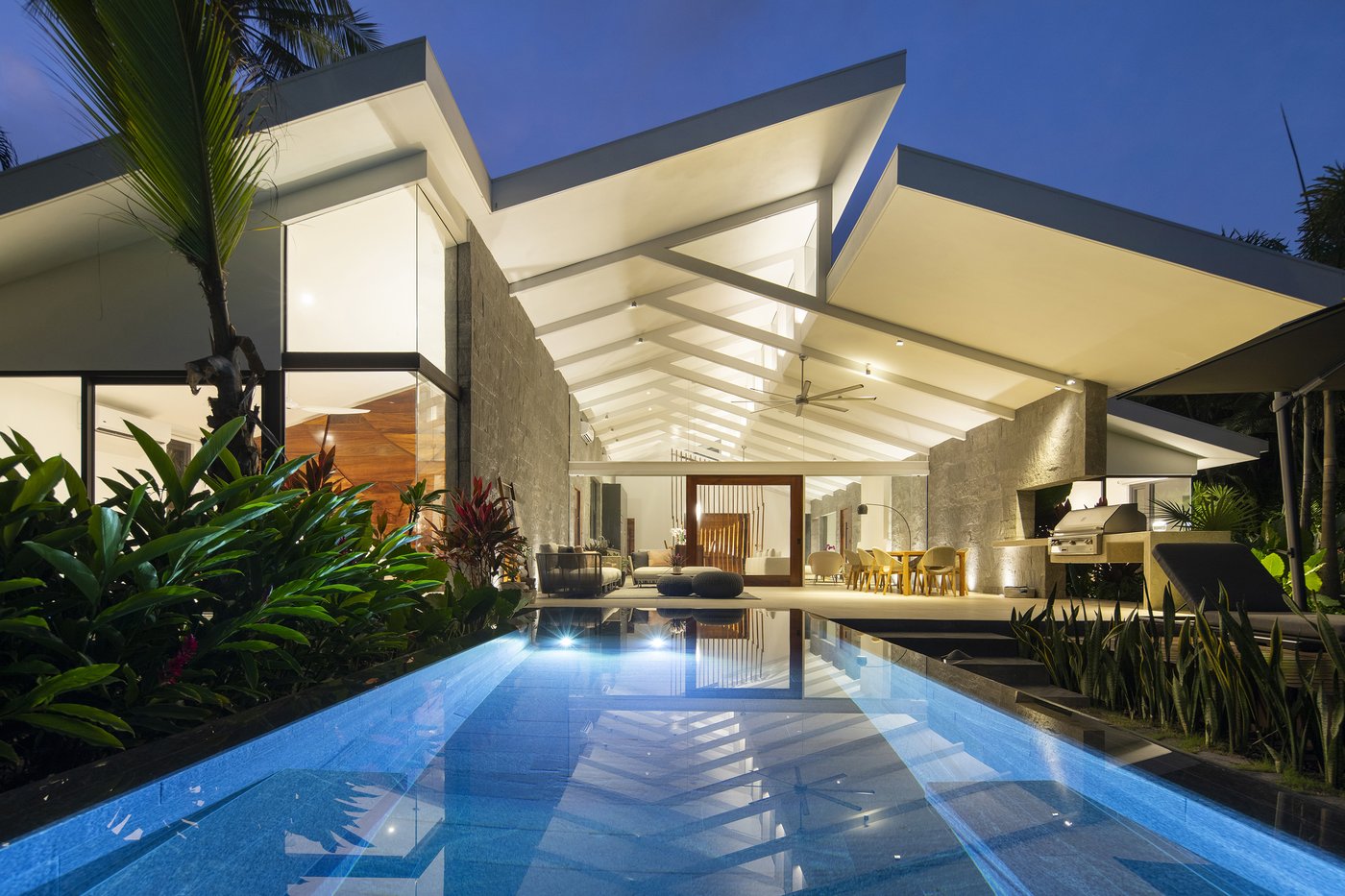
The most effective energy strategies cost nothing to run. Building orientation, roof overhangs, cross-ventilation paths, thermal mass, and solar shading are decisions made in the early stages of design — and they define the energy and comfort performance of a building for its entire life.
We conduct solar analysis on every project to understand where the sun lands at different times of day and year, and use that information to position openings, shading elements, and living spaces. Prevailing wind is mapped and incorporated into the plan to encourage natural cross-ventilation, reducing dependence on mechanical cooling.
Roof assemblies, wall construction, and glazing specifications are selected for their insulation values and their ability to manage heat gain and loss, with particular attention to the intense tropical solar load typical of Costa Rica's Pacific and Central Valley climates.
Strategies may include
02 — Water Design
In Costa Rica, rainfall is abundant — but it is seasonal, unevenly distributed, and increasingly unpredictable. Good water design means both managing excess and capturing what falls, so that a project can reduce its dependence on municipal or well supply while lowering its impact on local drainage systems.
We go beyond low-flow fixtures. Our water strategy integrates rainwater collection from roof areas into storage systems sized for irrigation, toilet flushing, or general site use. Where project scope and regulation permit, we design grey water systems that treat and recycle water from showers, basins, and laundry for reuse in irrigation or secondary services.
Landscape irrigation is planned to work with local rainfall patterns: native and adapted species selected for drought tolerance, drip irrigation over sprinklers, soil moisture sensors, and irrigation scheduling tied to seasonal rainfall reduce water consumption significantly compared to conventional tropical gardens.
Strategies may include
03 — Responsible Material Selection
Every material specification is an environmental decision. We consider the origin, embodied energy, durability, maintenance requirements, end-of-life impact, and the chemical profile of the materials we specify.
We prioritise materials sourced locally or regionally — reducing transport emissions while supporting local industries and craftspeople. Stone, timber, clay, concrete, and ceramic products available within Costa Rica or Central America are evaluated before imported alternatives. Where imported materials are used, longevity and durability are weighed against the environmental cost of replacement over the building's life.
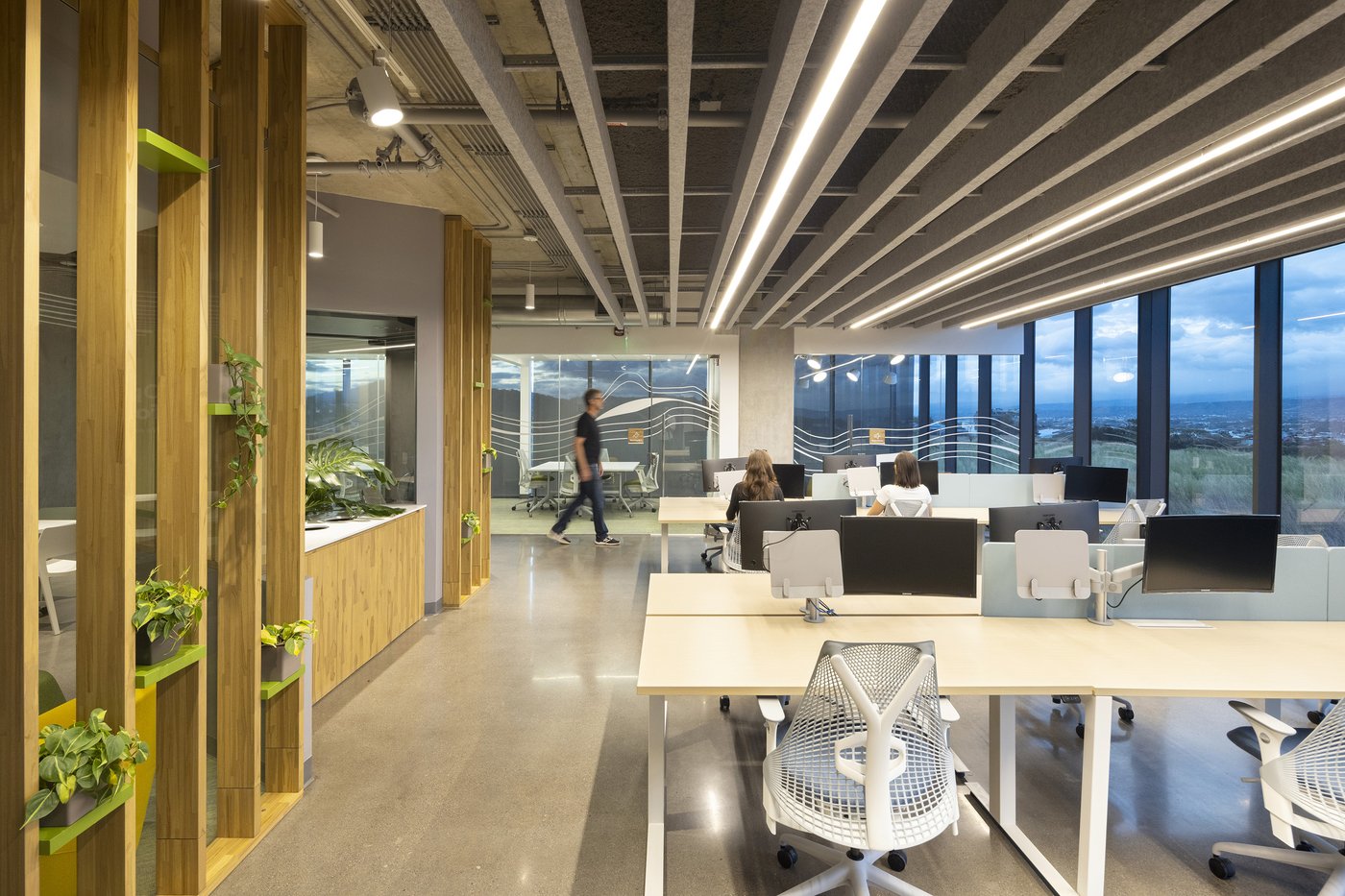
Interior finish selections emphasise low-VOC paints, adhesives, and sealants to maintain indoor air quality. Structural and cladding decisions consider the building's capacity to be adapted or repurposed over time, reducing the likelihood of demolition. Where relevant — as with the Enel Costa Rica headquarters — material selection supports third-party certification such as WELL, where indoor material quality is rigorously assessed.
Considerations include
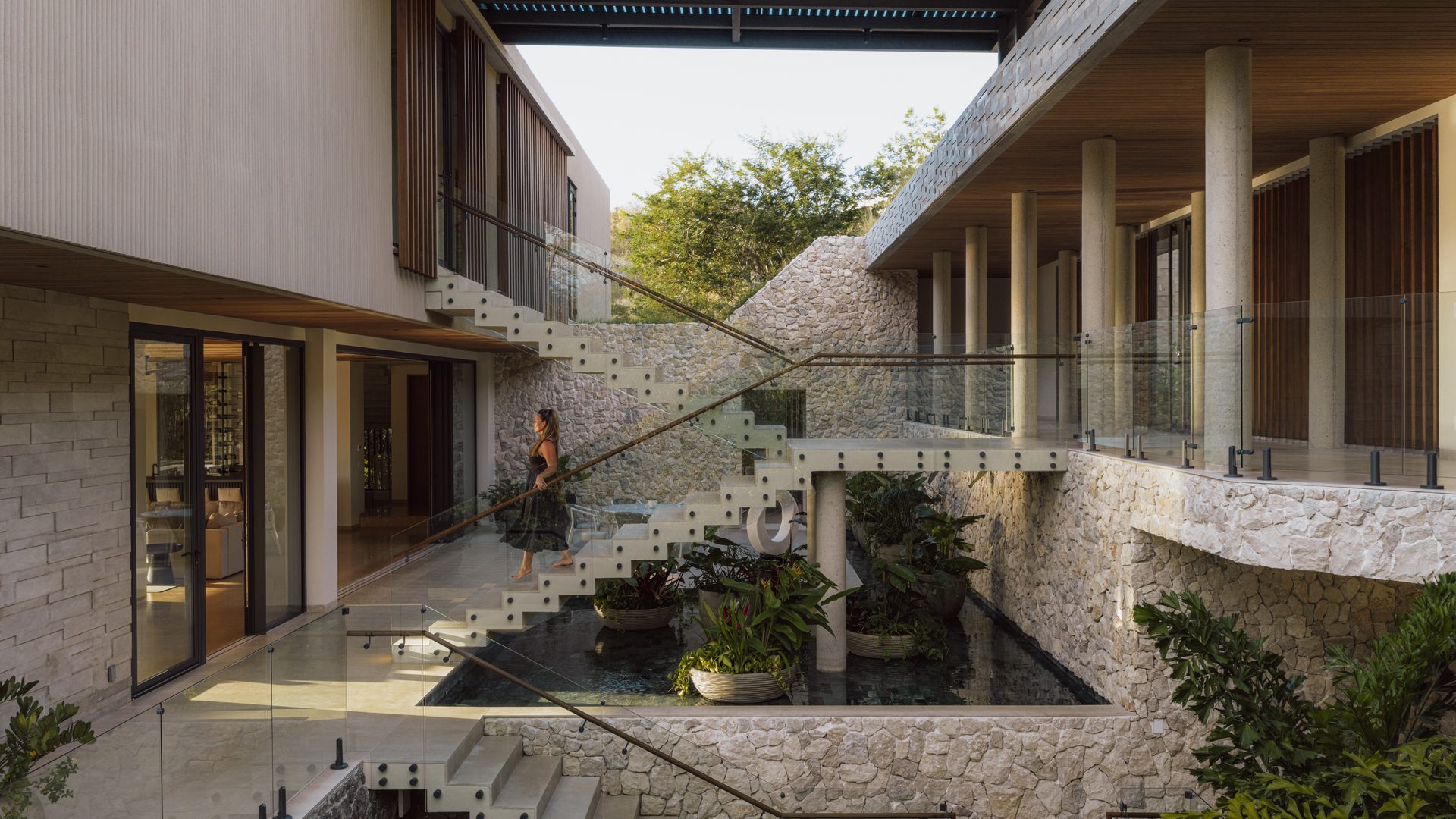
04 — Living Roof Design
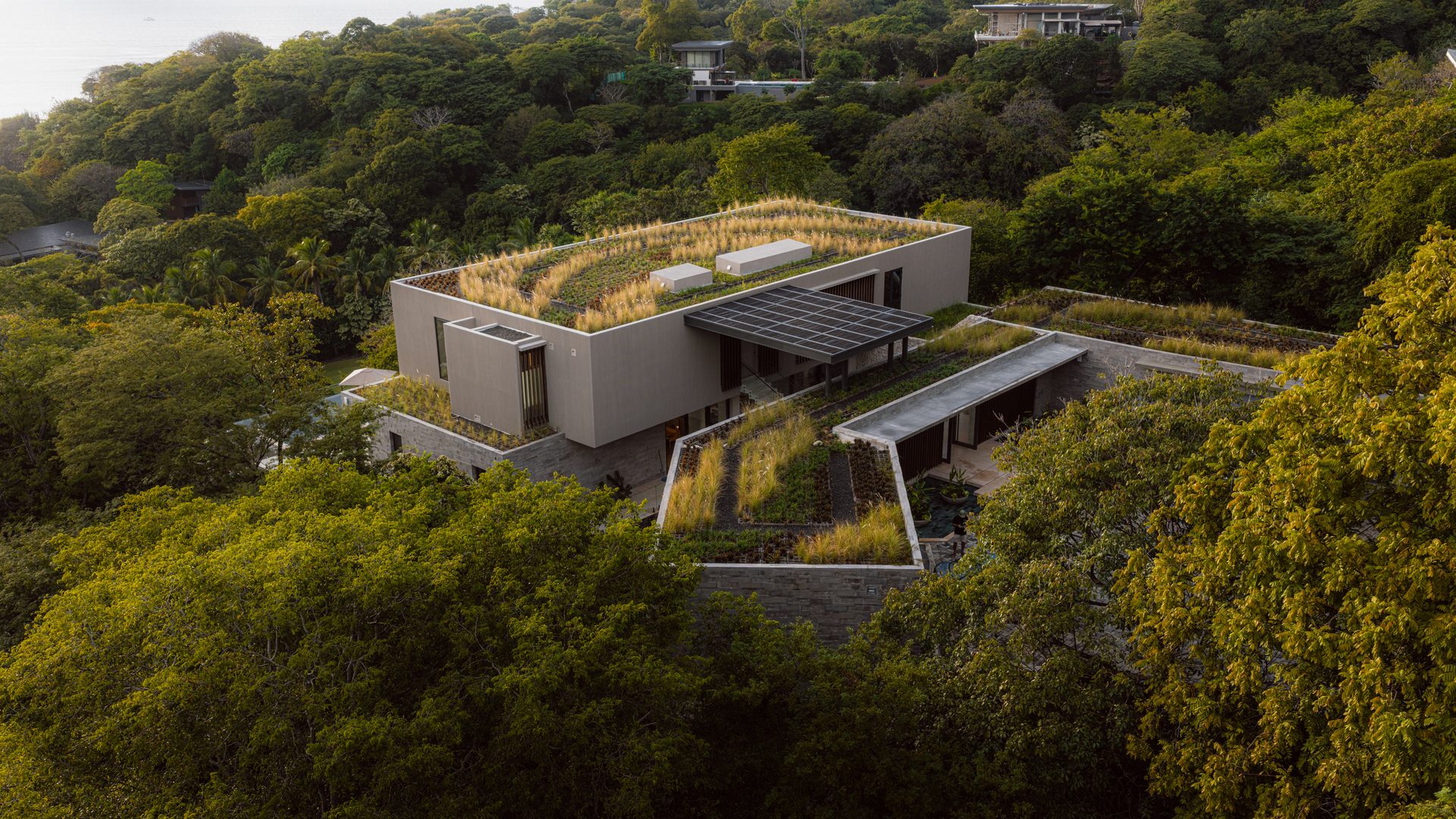
Every building has five elevations — four walls and a roof. In conventional construction, the roof is a lost surface: waterproofed, drained, and forgotten. A living roof reclaims it. Planted with grasses, sedums, native groundcovers, and low shrubs, it becomes a continuous extension of the landscape — a fifth plane that belongs to the site rather than sitting on top of it.
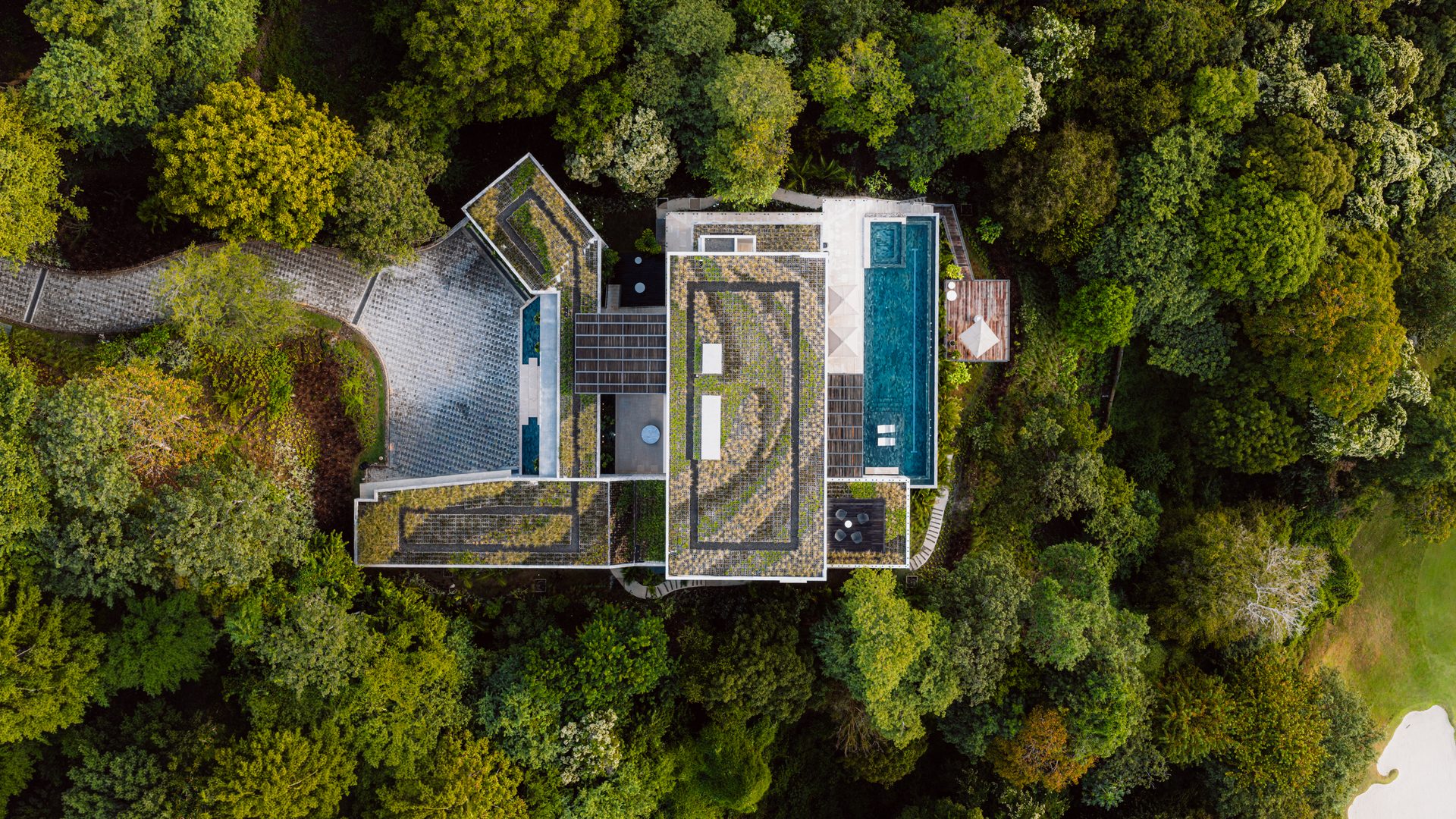
Casa Continuum makes this idea central to the architecture. The roof is not just planted; it disappears into the hillside. From above — and from the slopes around the site — the house reads as ground, not structure. The building does not interrupt the landscape; it continues it.
A living roof is among the most integrated sustainability moves available in architecture. It delivers thermal performance, water management, biodiversity, and visual resolution simultaneously — without requiring any mechanical system to do so.
Benefits
05 — Low-Energy Lighting Systems
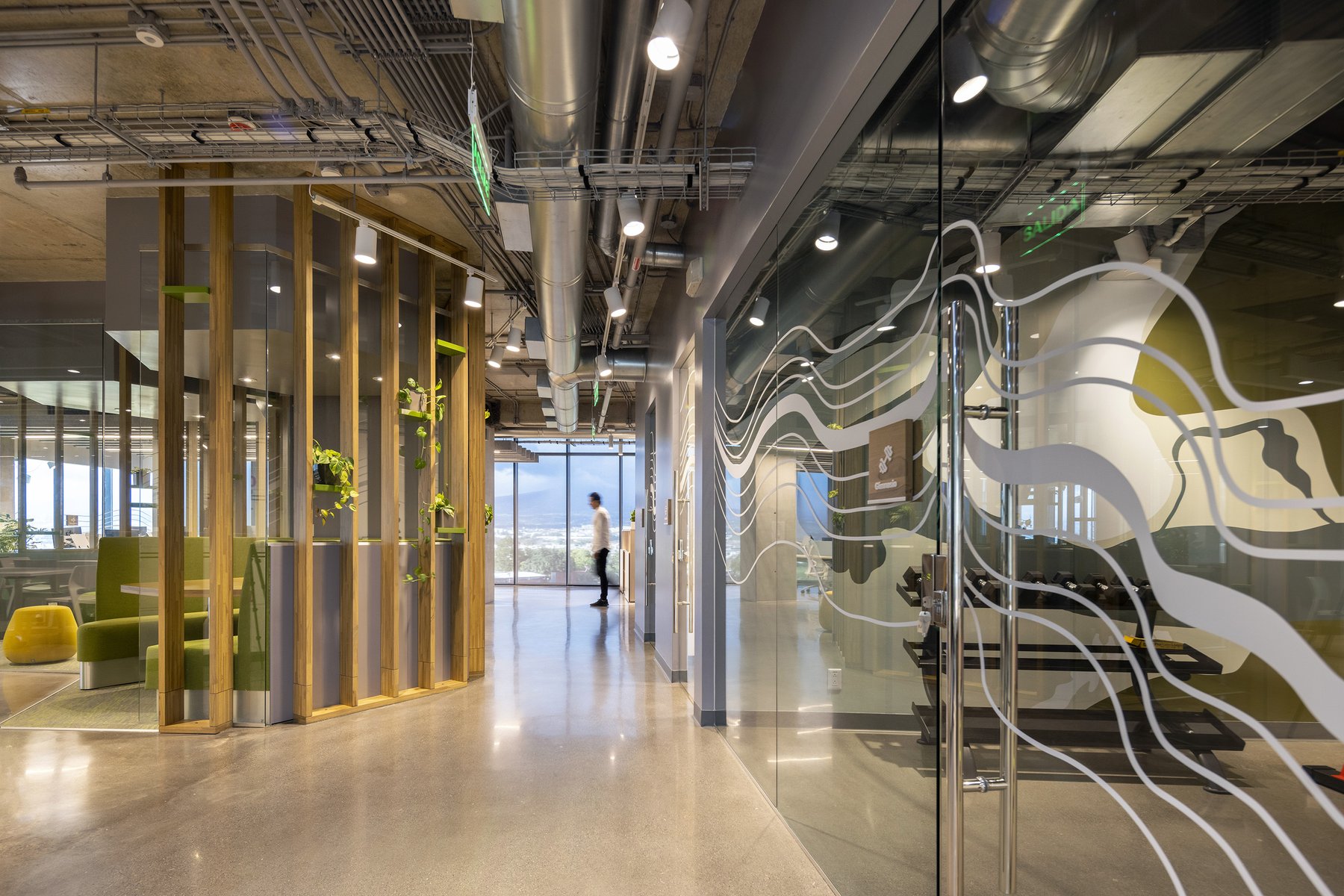
Lighting is one of the most controllable contributors to a building's energy consumption — and one of the most impactful on occupant experience. We design lighting systems that are efficient by specification and intelligent by control, so that energy use follows actual occupancy and activity rather than running continuously.
All lighting is LED, selected for the appropriate colour temperature, CRI, and light output for each space and task. Architectural lighting is integrated into the structure and ceiling profiles wherever possible to eliminate the heat and maintenance burden of exposed fixture types.
Motion and occupancy sensors are specified for circulation areas, service spaces, external lighting, and any area with intermittent use. Programmable lighting control systems — from simple zone switching to full scene-based automation — allow lighting levels and schedules to be tuned to daily and seasonal routines, with remote access and energy monitoring where required.
Strategies may include
06 — Landscape & Ecological Design
Costa Rica holds around 6% of the world's biodiversity on less than 0.03% of its land area. Every project we design sits within this context — on land that was, or could be, habitat for birds, insects, mammals, and plants that are fundamental to local ecological health.
Our landscape approach favours native and endemic species over ornamental or exotic alternatives. Native trees, shrubs, and ground cover support the insects and birds that rely on them, create food sources for pollinators, and require significantly less water and maintenance once established. Exotic ornamentals, however visually appealing, often support far fewer species and can displace native vegetation over time.
We work with landscape consultants and local nurseries to identify species appropriate to each microclimate and site condition. Planting plans are designed to create layered canopy, mid-story, and ground-level habitats — structures that attract and retain wildlife over time. Where the site allows, corridors are preserved or designed to connect the project to adjacent habitat rather than isolating it.
Strategies may include
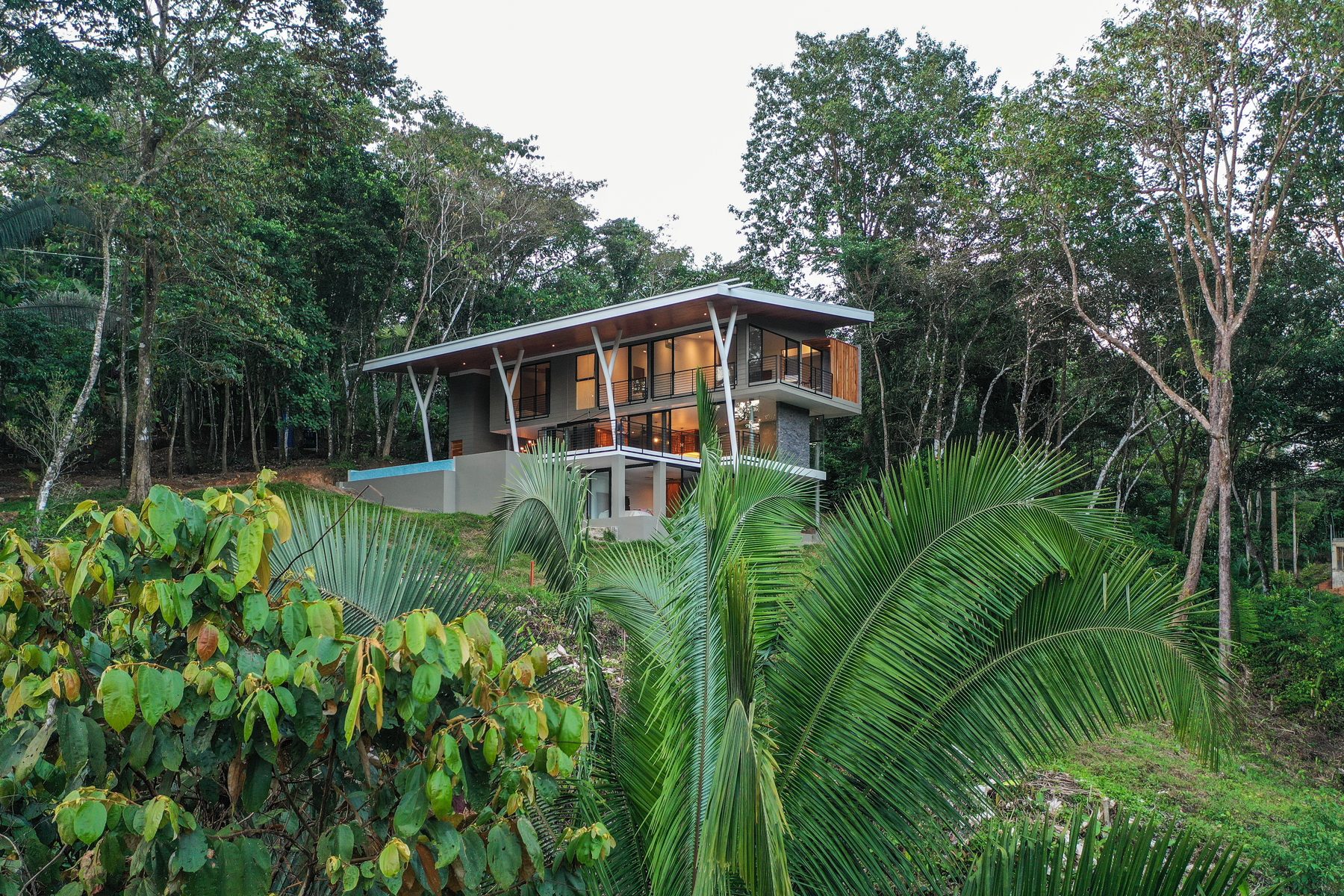
07 — Third-Party Certification
Certification programmes provide a structured framework for measuring sustainability performance and communicating it to tenants, buyers, and stakeholders with confidence. They also introduce rigour into the design process — requiring documentation, analysis, and verification that raises the quality of every decision.
Inverse Project has experience working within WELL, LEED, and EDGE certification frameworks. The Enel Costa Rica headquarters achieved WELL Platinum — the first project in Costa Rica to reach that level. We are available to support certification strategy, documentation, and consultant coordination for projects pursuing any of these standards.
WELL Building Standard
WELL Certification
The WELL standard focuses on the health and wellbeing of building occupants across ten categories: air, water, nourishment, light, movement, thermal comfort, sound, materials, mind, and community. Inverse Project achieved WELL Platinum on the Enel Costa Rica headquarters — the first WELL Platinum building in Costa Rica.
Leadership in Energy & Environmental Design
LEED Certification
LEED is the most widely adopted green building framework globally, covering site selection, water efficiency, energy performance, materials, indoor environment quality, and innovation. Certification is available across multiple building types and project scales, from individual homes to large commercial developments.
Excellence in Design for Greater Efficiencies
EDGE Certification
EDGE is a certification platform developed by IFC (World Bank Group) focused on resource efficiency in energy, water, and embodied energy in materials. It is particularly relevant for residential and hospitality projects in emerging markets, offering a streamlined certification path with clear measurable targets for each category.
The most sustainable building is one that is built well, used for a long time, and placed honestly in its landscape.
Sustainability begins with site — with understanding what is already there, what the climate demands, and what the land can support. From that starting point, every design decision becomes an opportunity to reduce impact, conserve resources, and leave the site better than we found it.
Get in Touch
We can integrate sustainability strategy from the first site visit — or support a project already in design. Contact us to discuss your project and goals.
Contact Us