
Residential
Santa Ana, Costa Rica
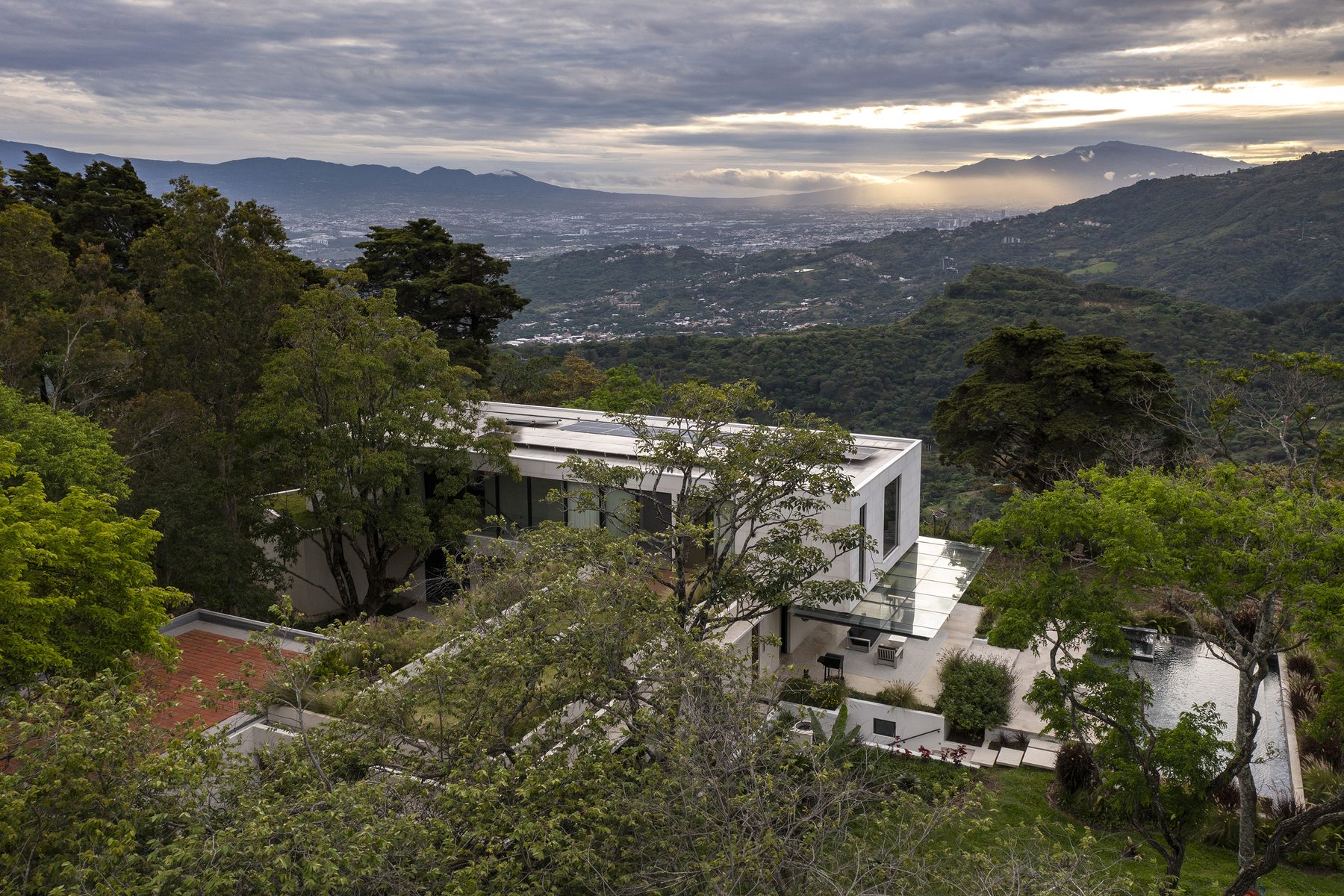
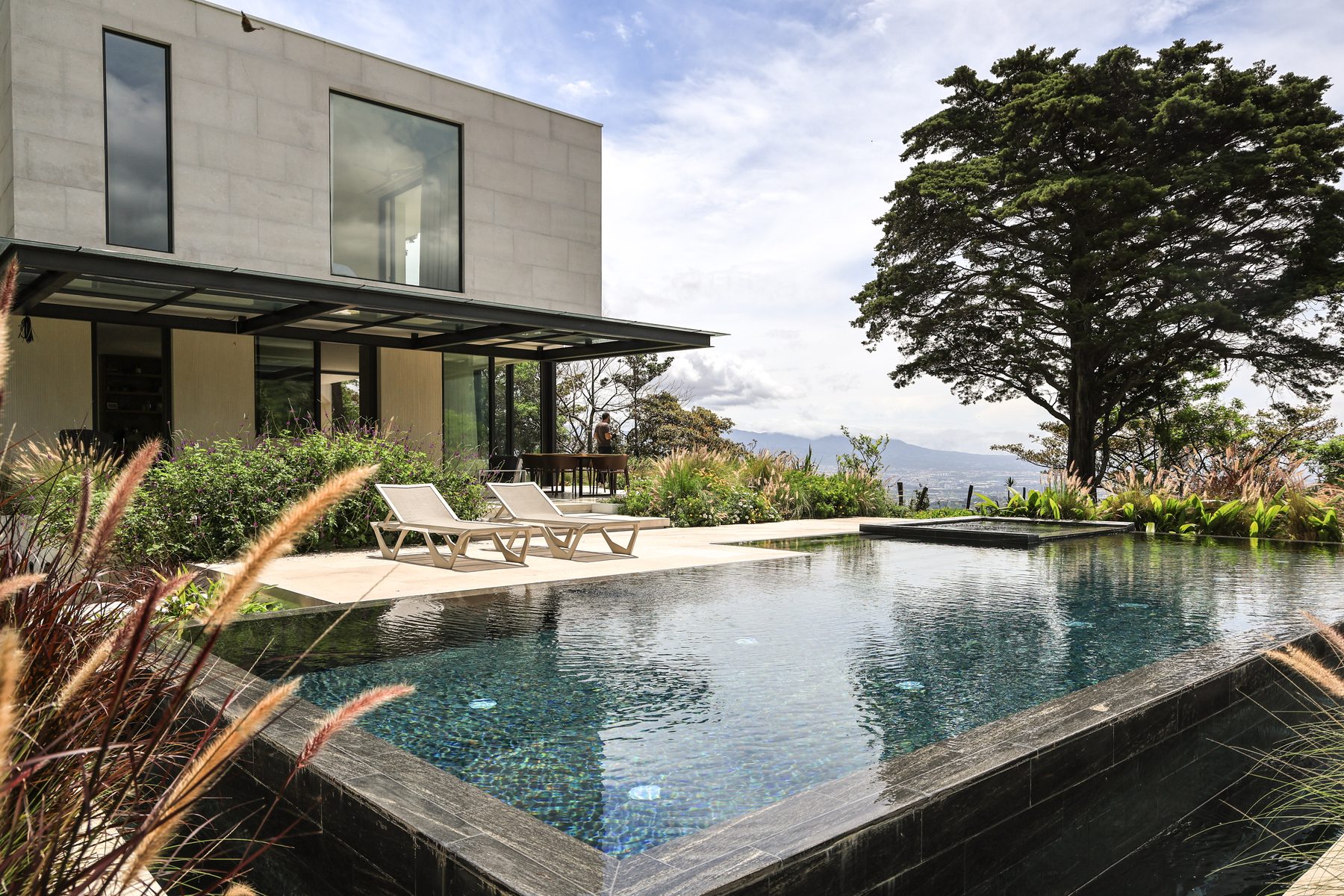
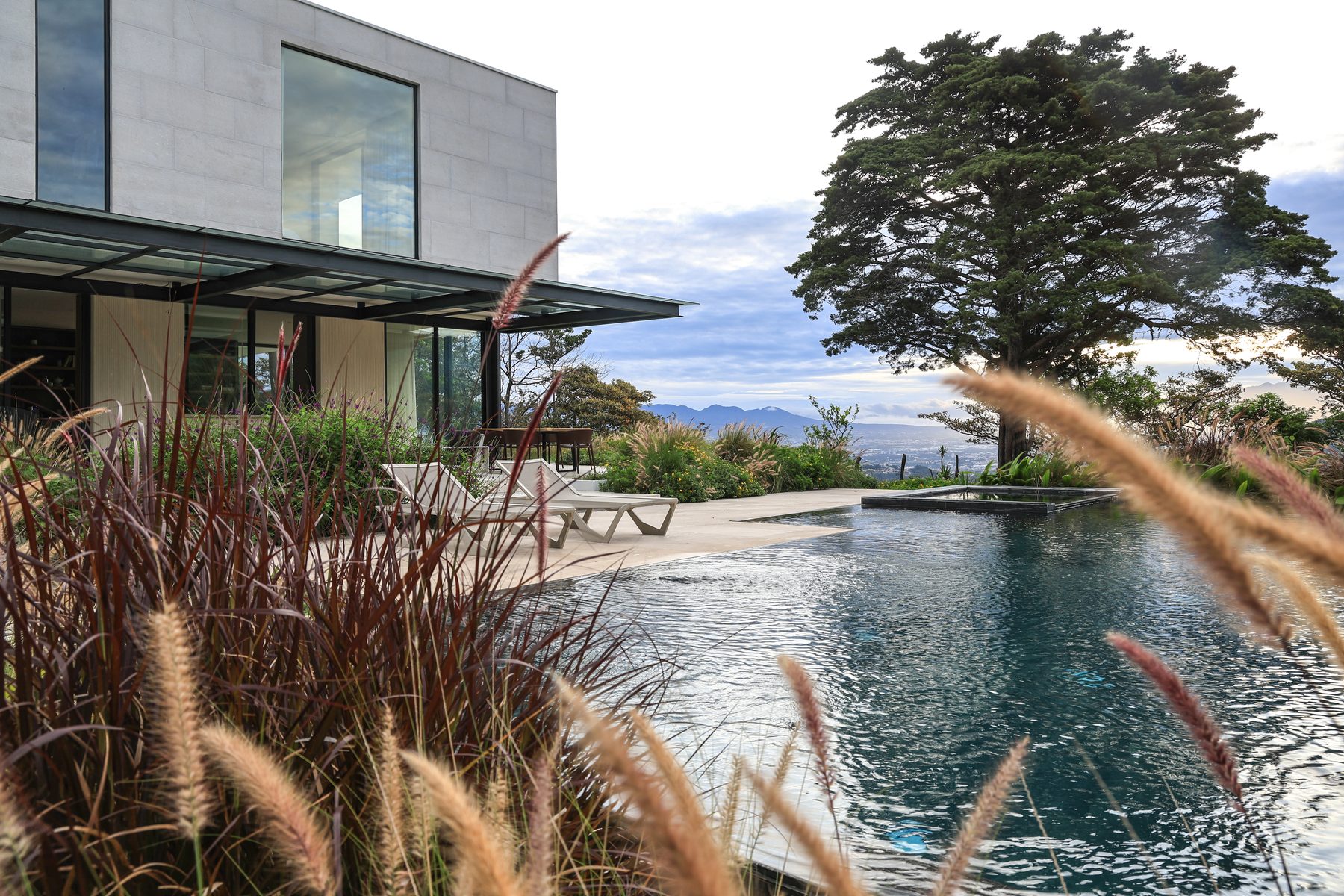
A family home for five on a forested hillside above Santa Ana — a U-shaped courtyard wrapped around a single feature tree, with panoramic views across the city, the volcano, and the windmill-lined hills beyond.
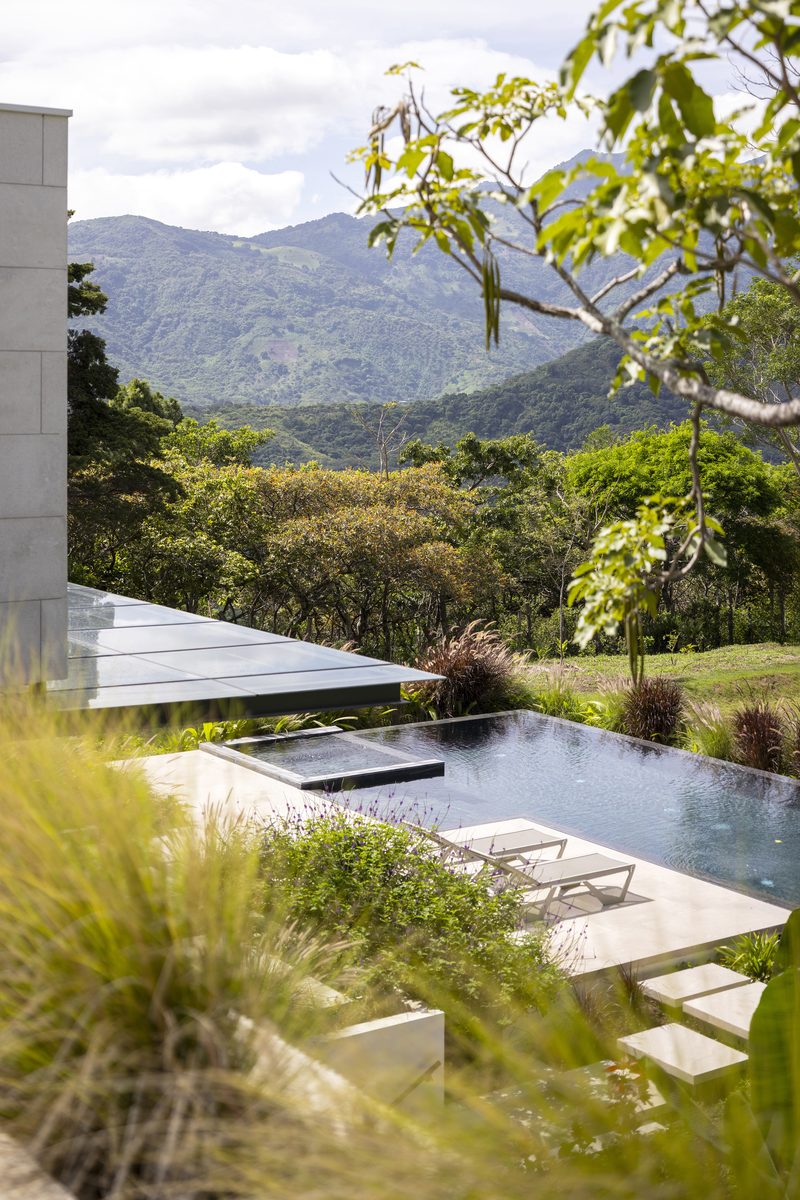
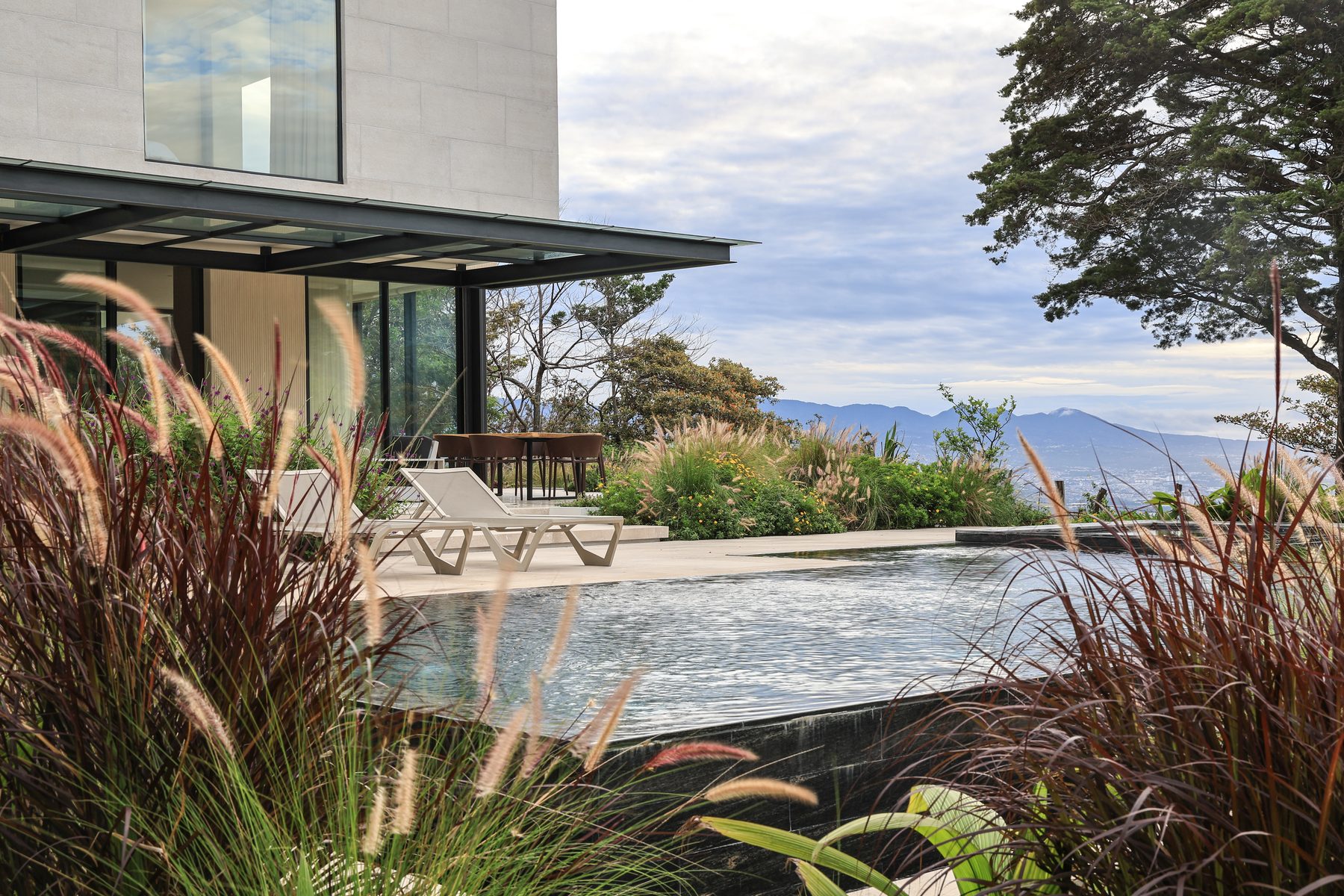
Claro del Bosque occupies a large hillside lot above Santa Ana — a property that had long contained forest and an old orchard, chosen for its temperate climate, its established landscape, and the breadth of its outlook. From here the view is panoramic: the city and its lights spread below, a volcano on the horizon, and on the green hills of the middle distance, the illuminated blades of Santa Ana's wind turbines turning against the sky. At an elevation of around 1,400 metres, the climate is mild and remarkably consistent — temperatures sit in the low to mid twenties year-round, with six months of tropical rain. There is no need for air conditioning.
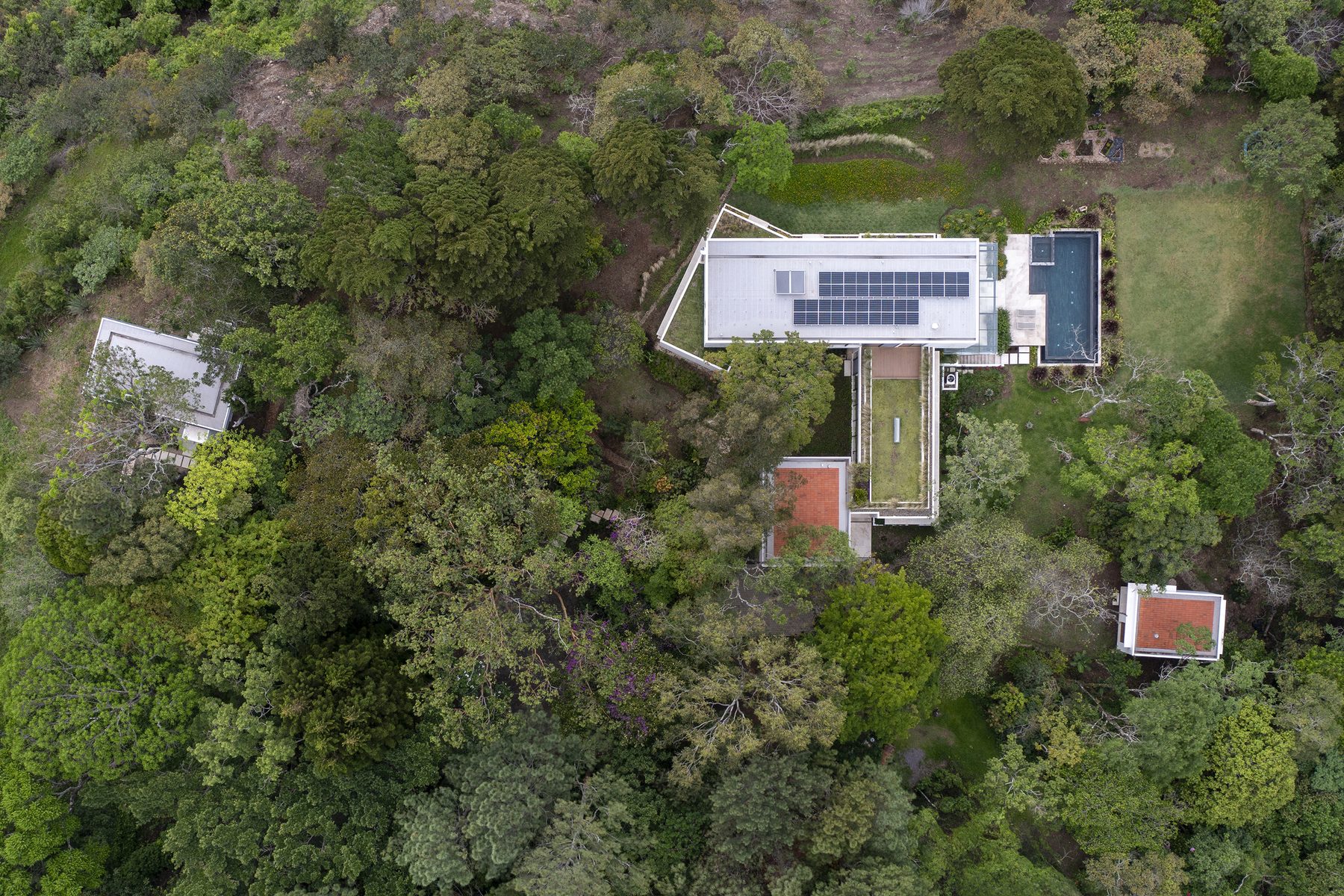
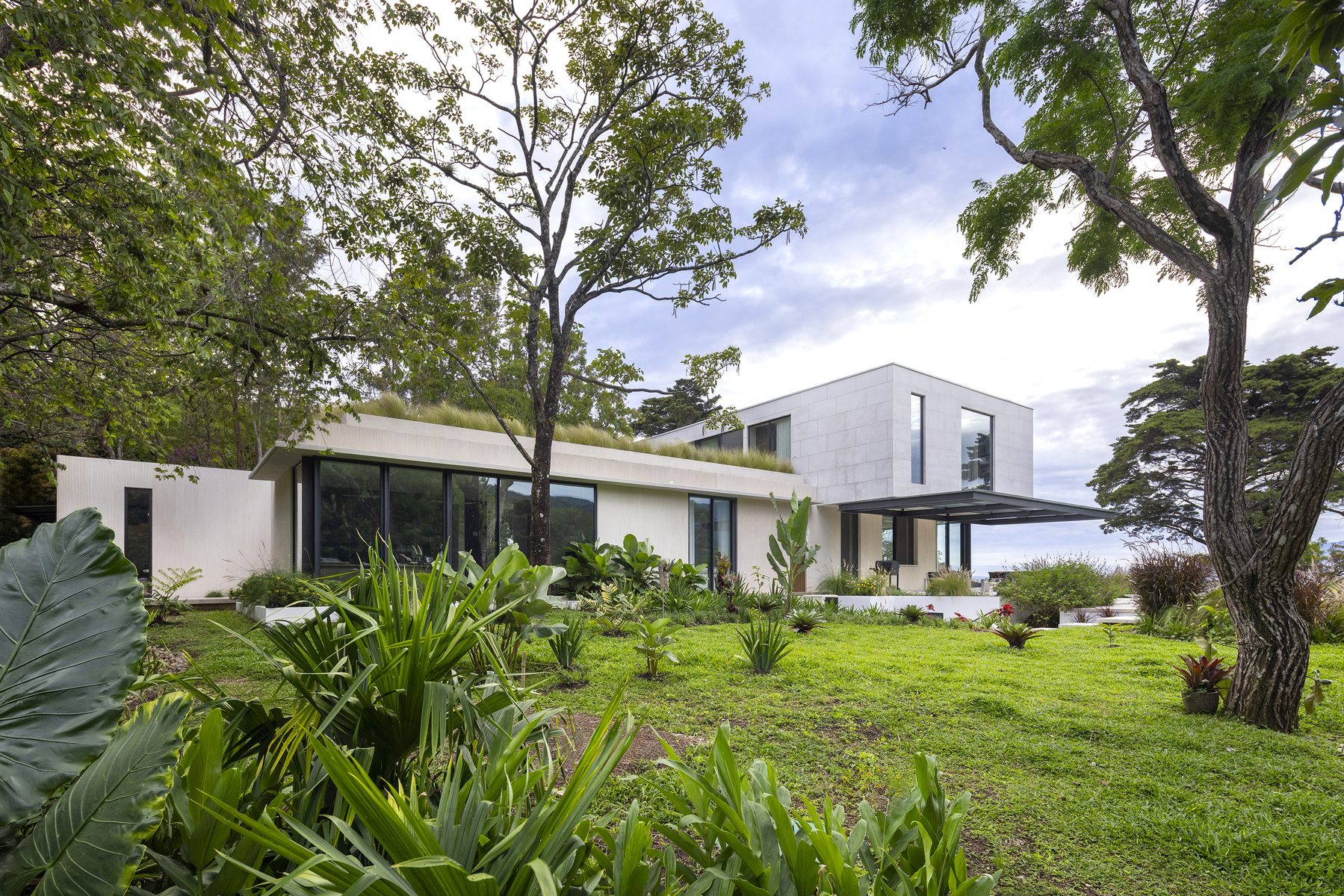
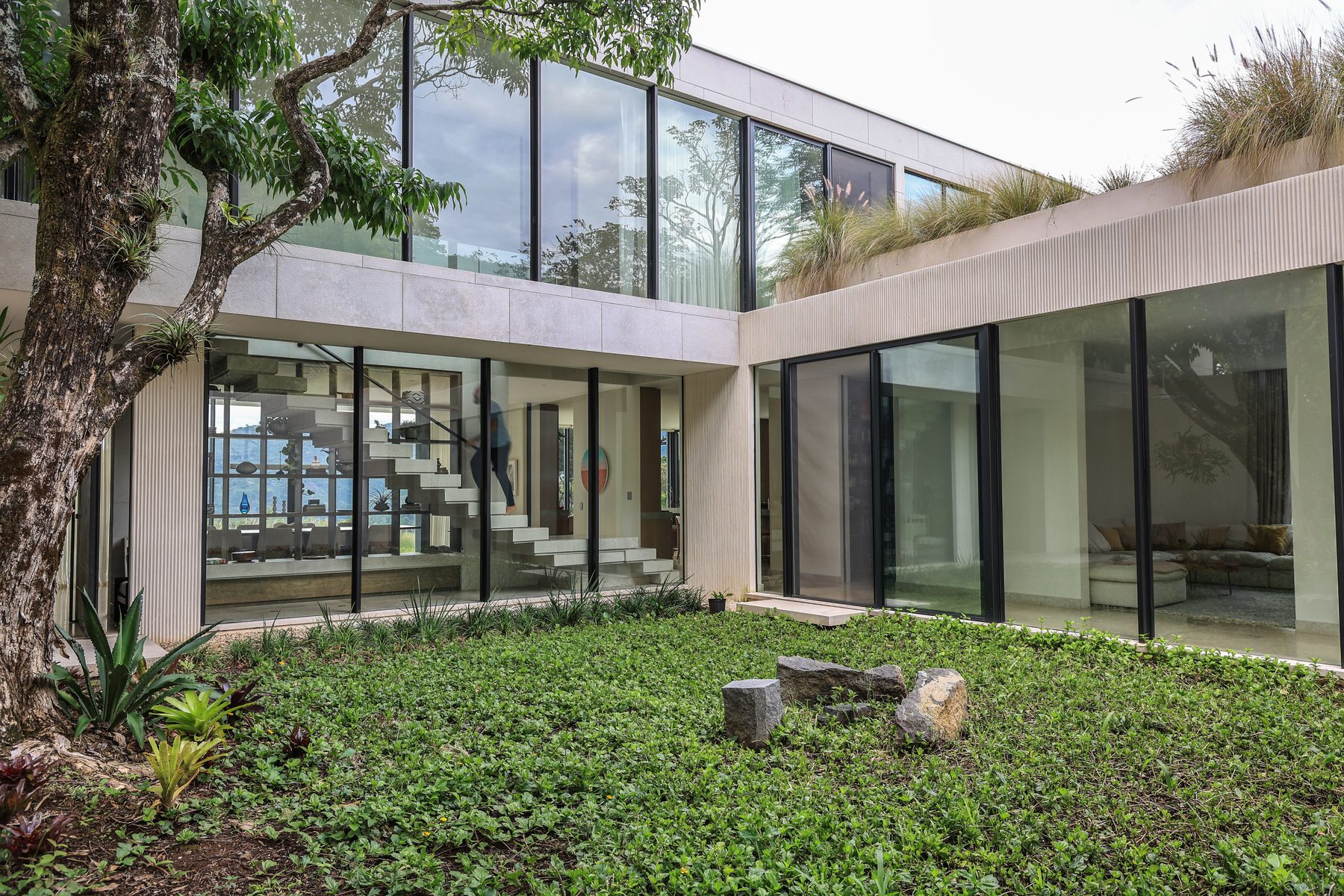
The original intention was to place the house at the highest point of the lot, where views are strongest. But that area held a grove of established trees too significant to disturb. The house was repositioned in a more open area around a single large tree that remained as a centrepiece. The design then wrapped itself in a U-shaped formation around this tree, creating a courtyard home. The courtyard provides shelter during the cooler, wetter months while remaining open to the garden and the sky — and the tree is visible from multiple sides of the house, giving daily movement through the home a dynamic and ever-changing quality.
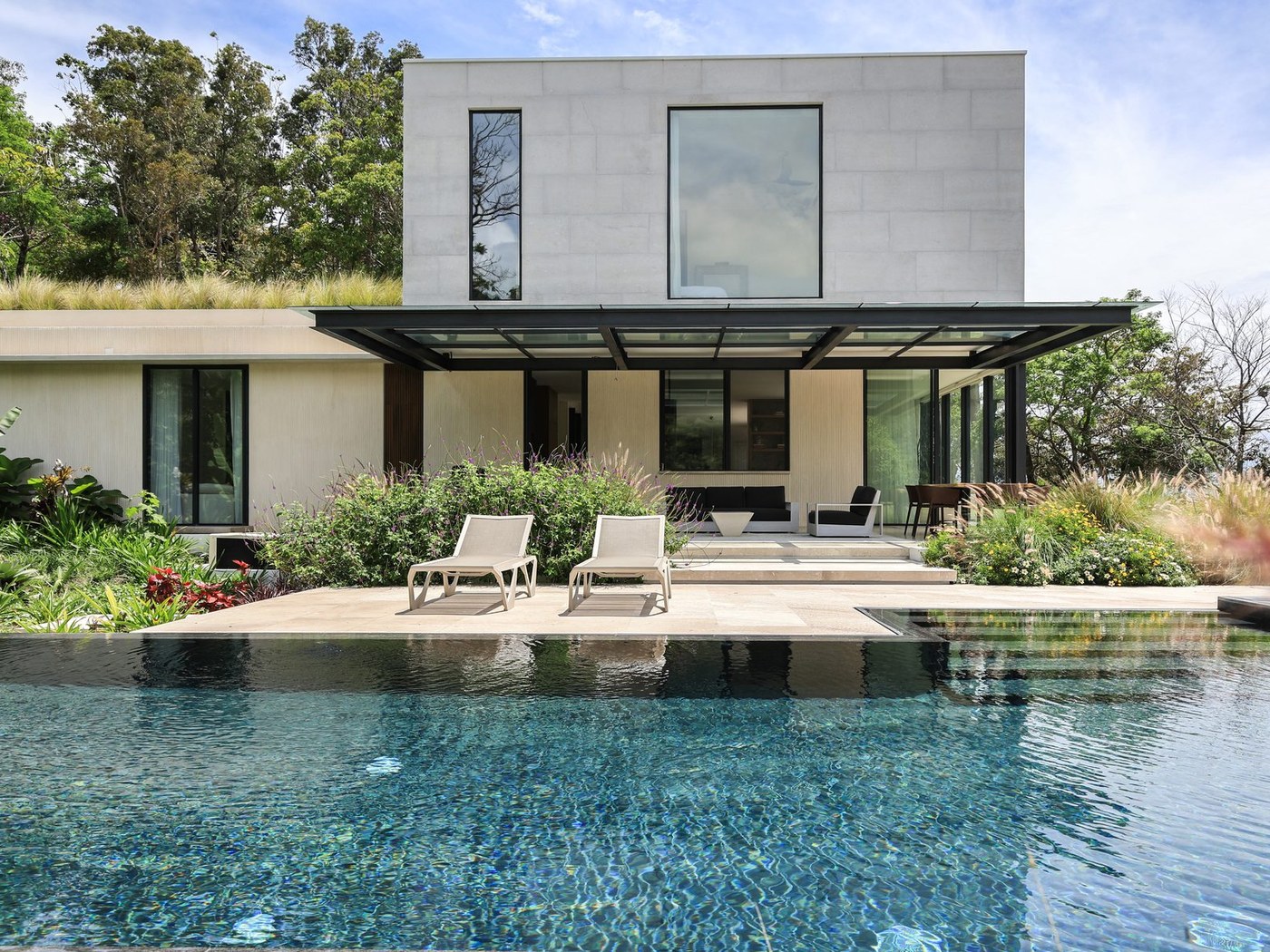
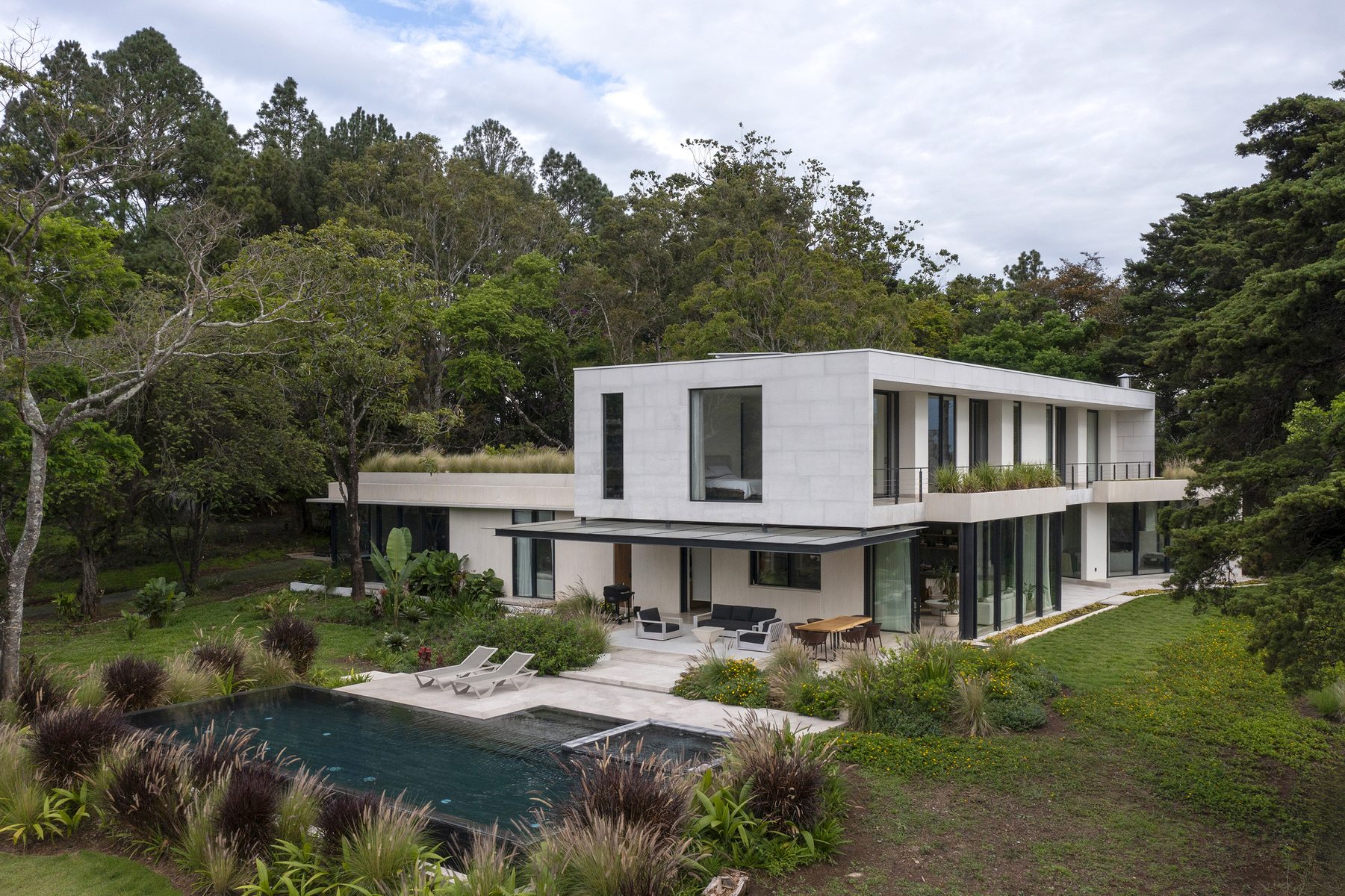
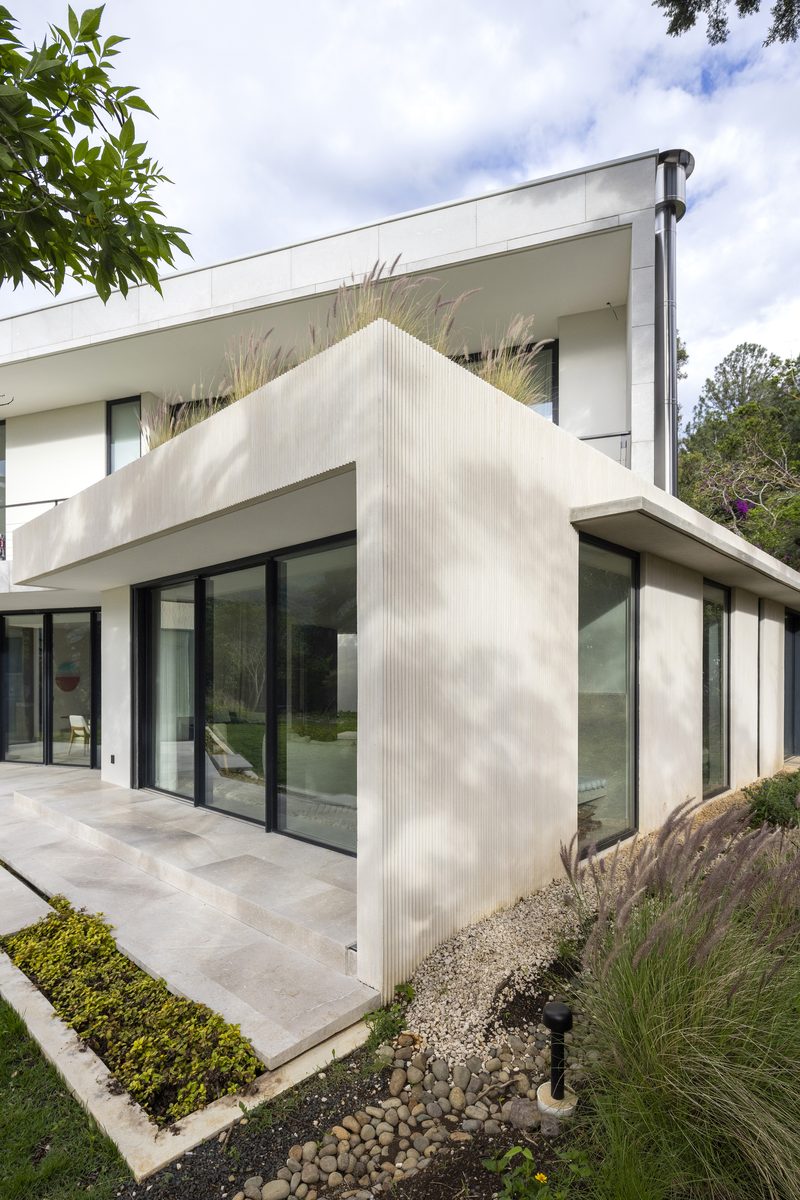
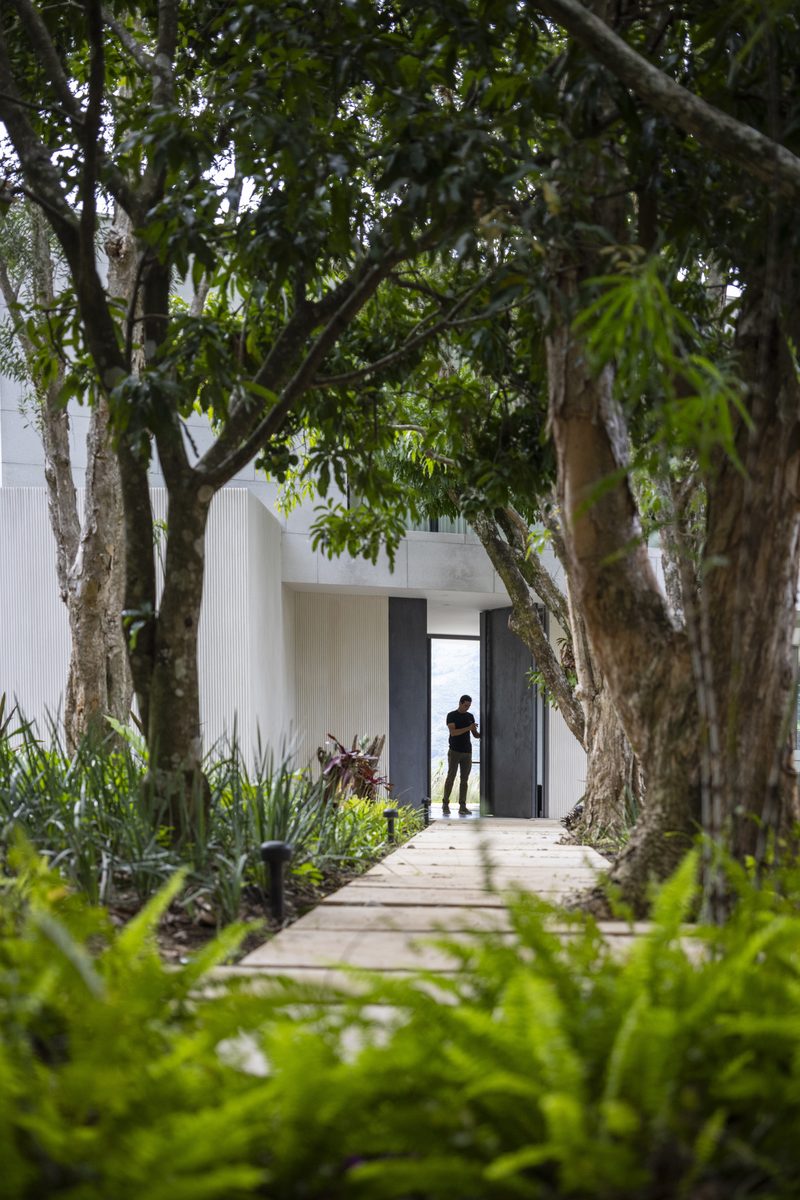
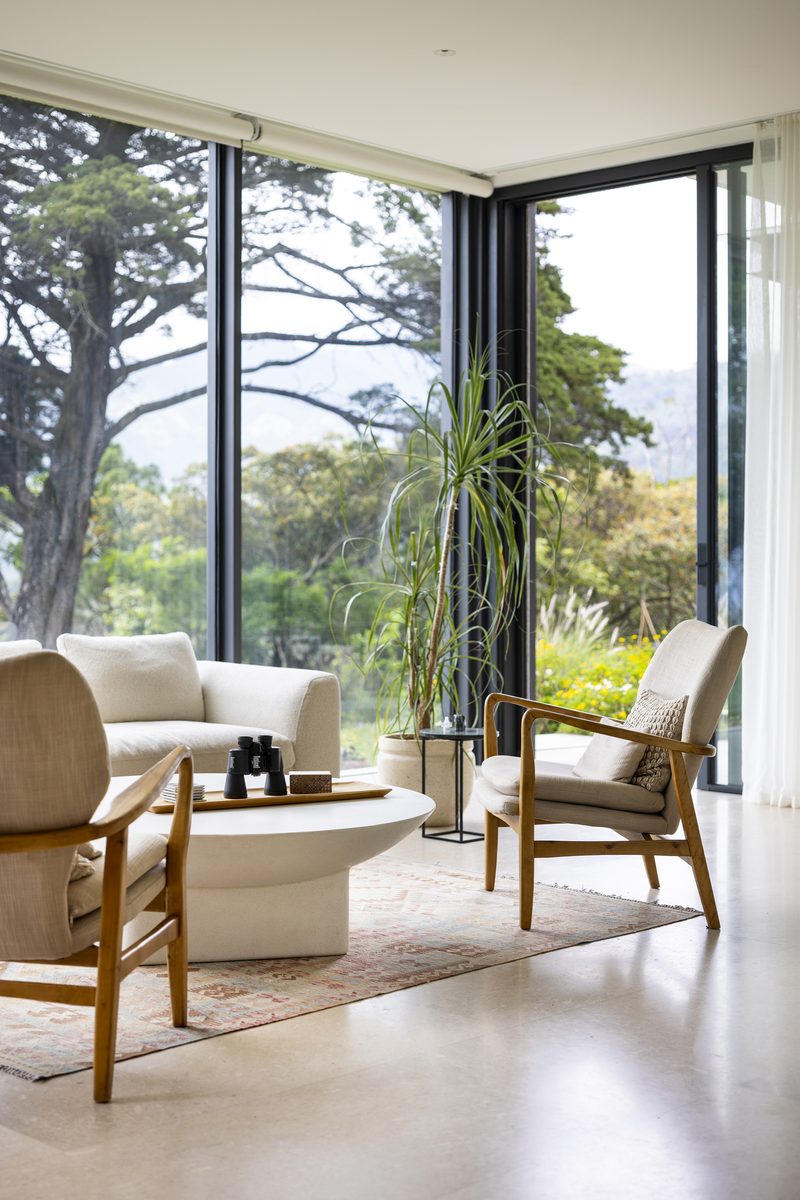
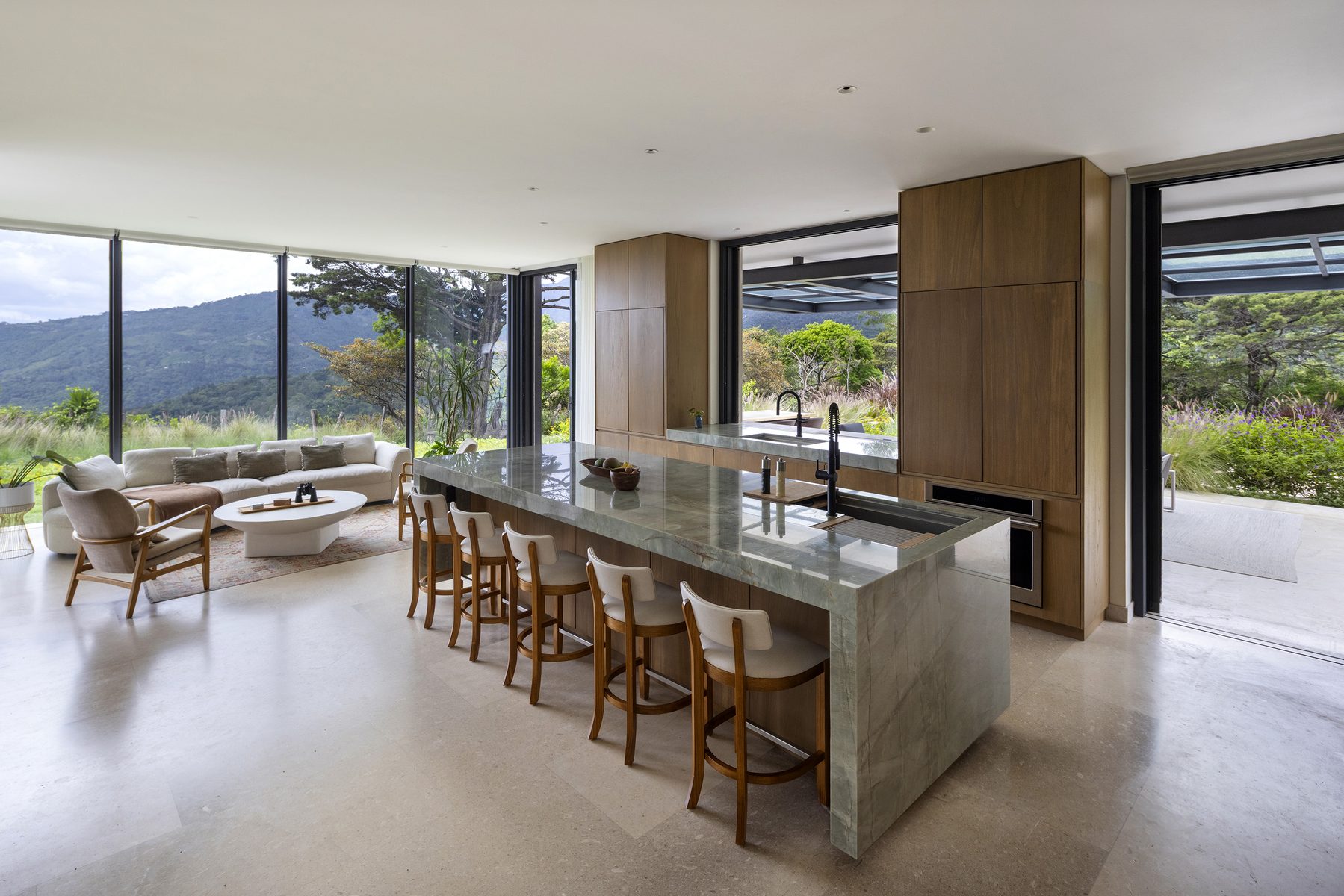
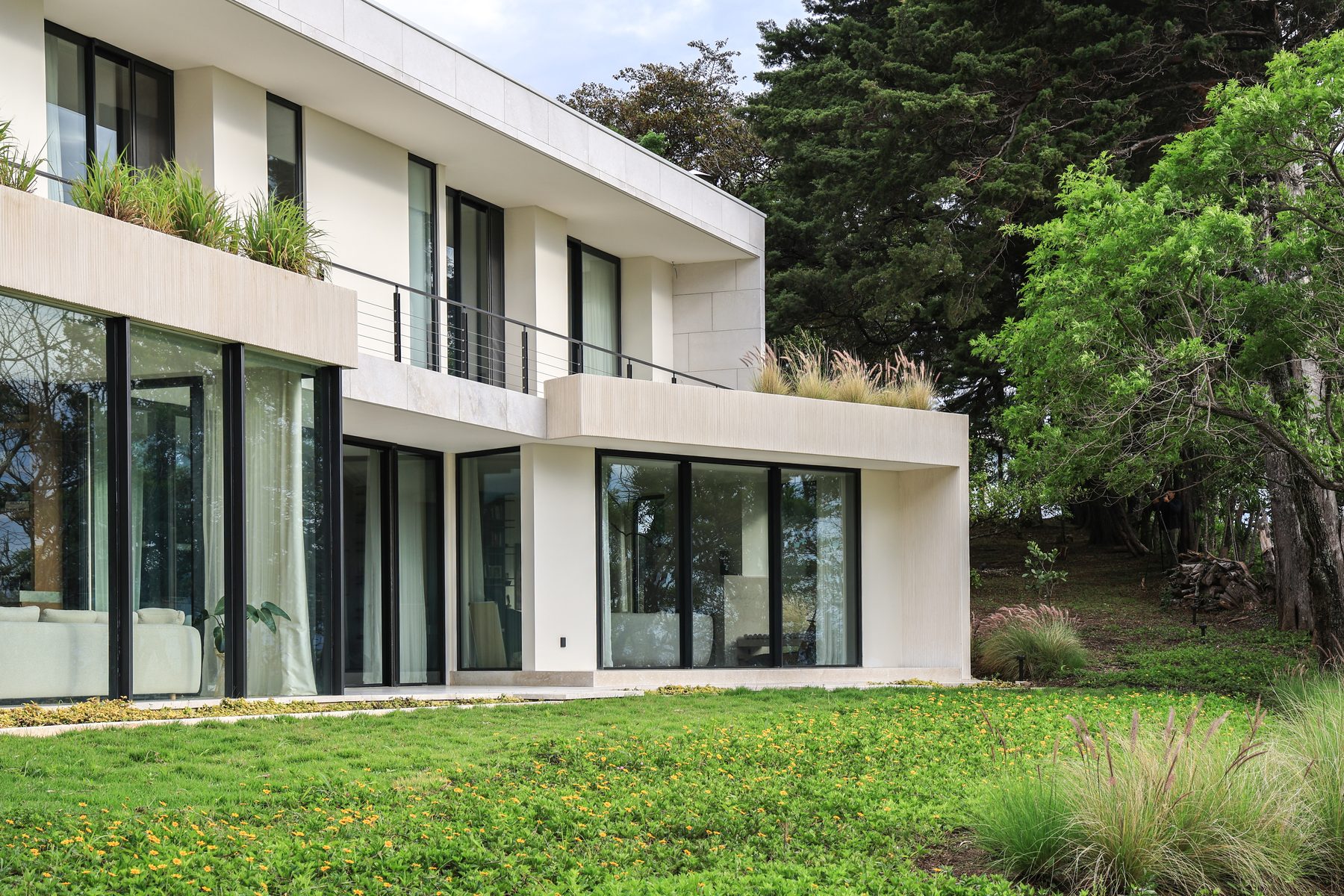
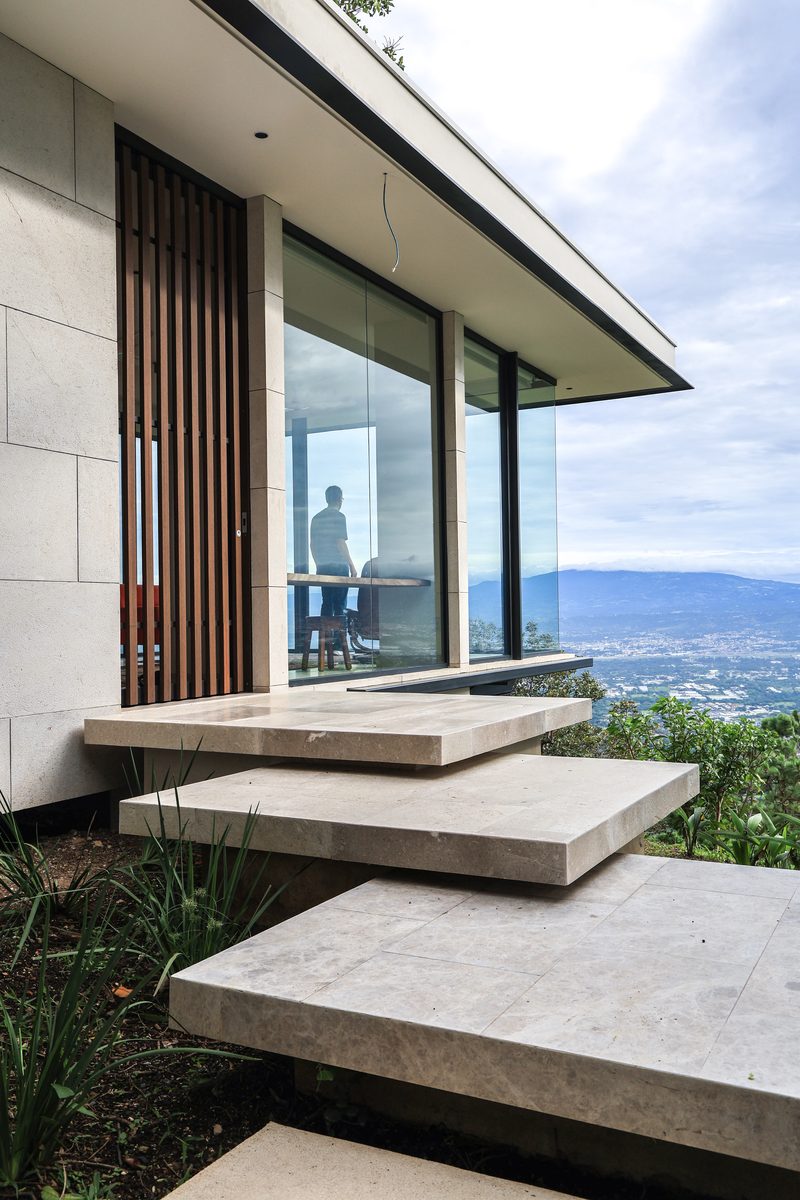
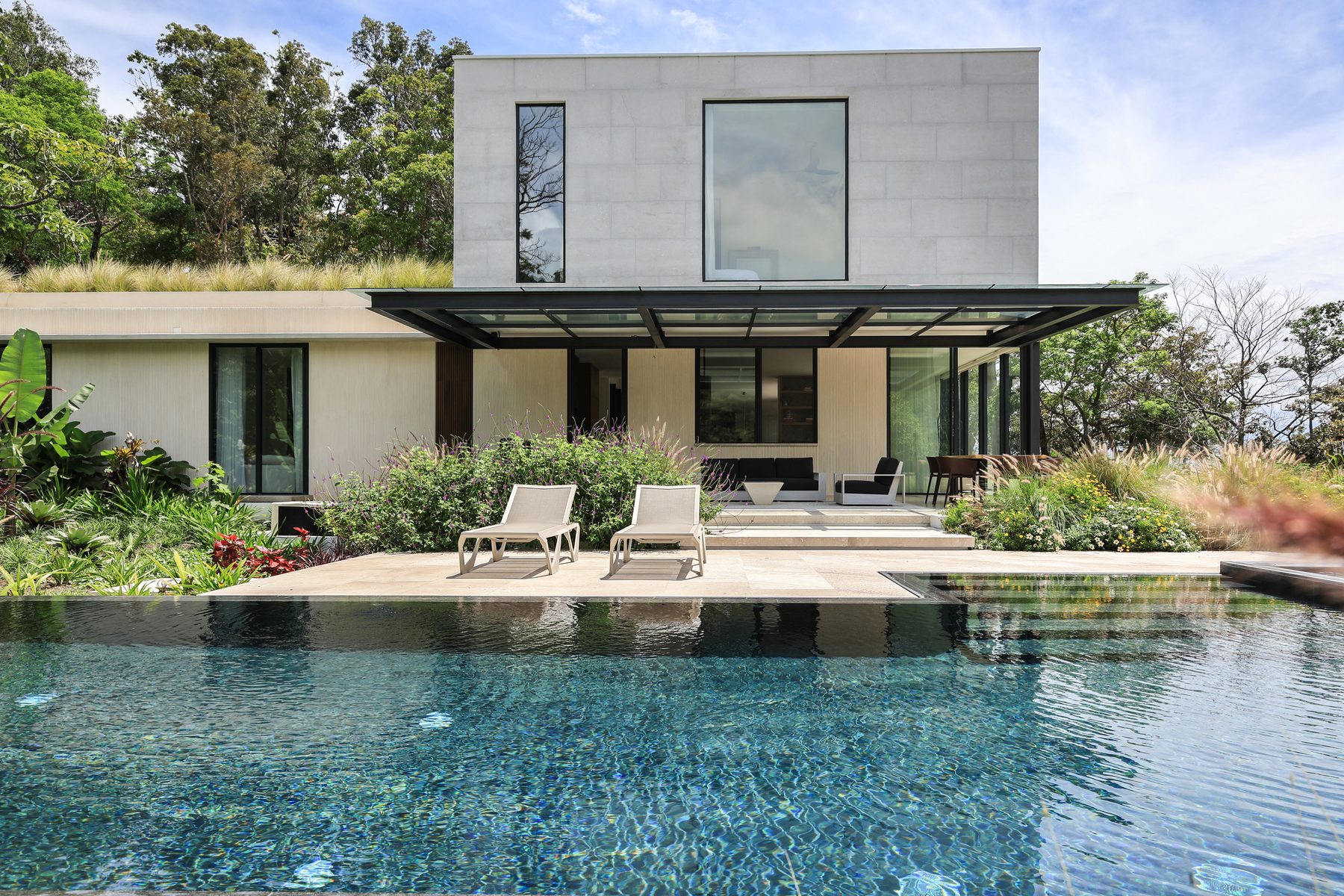
Garage, living areas, family office, kitchen, dining, and guest suite are all on the lower level. Above, in a bar formation, the family bedrooms open onto a shared green roof terrace with views out toward the windmills. The home has three points of entry: through the courtyard via a large cement-washed steel pivot door; from the garage through a mudroom with individual storage for each family member; or from the garden. For a very active family of five, the mudroom earns its place — a daily clearinghouse for school bags, sports equipment, and outdoor gear. The kitchen is the true centre of gravity of the plan. A very large island anchors the space, equally suited to food preparation, homework, or a conversation with guests. Alongside it, a small lounge with a sofa and two chairs offers a place to read, play a board game, or drink a coffee with sweeping city views — the kind of space that draws the family together without occasion. Circulation radiates from here to the dining room, living room, staircase, and family room. From here, an outdoor terrace connects to the pool, and beyond that a large grass field where the children play.
The roofs carry solar photovoltaic panels sized to meet 100% of the home's electricity needs, alongside solar hot water panels to reduce energy demand further. Grey and black water pass through an on-site treatment plant and are reused for irrigation. Windows are double-glazed to manage heat gain and loss across seasons, and all shading, ceiling fans, and lighting run on automated control systems calibrated to the household's patterns of use.
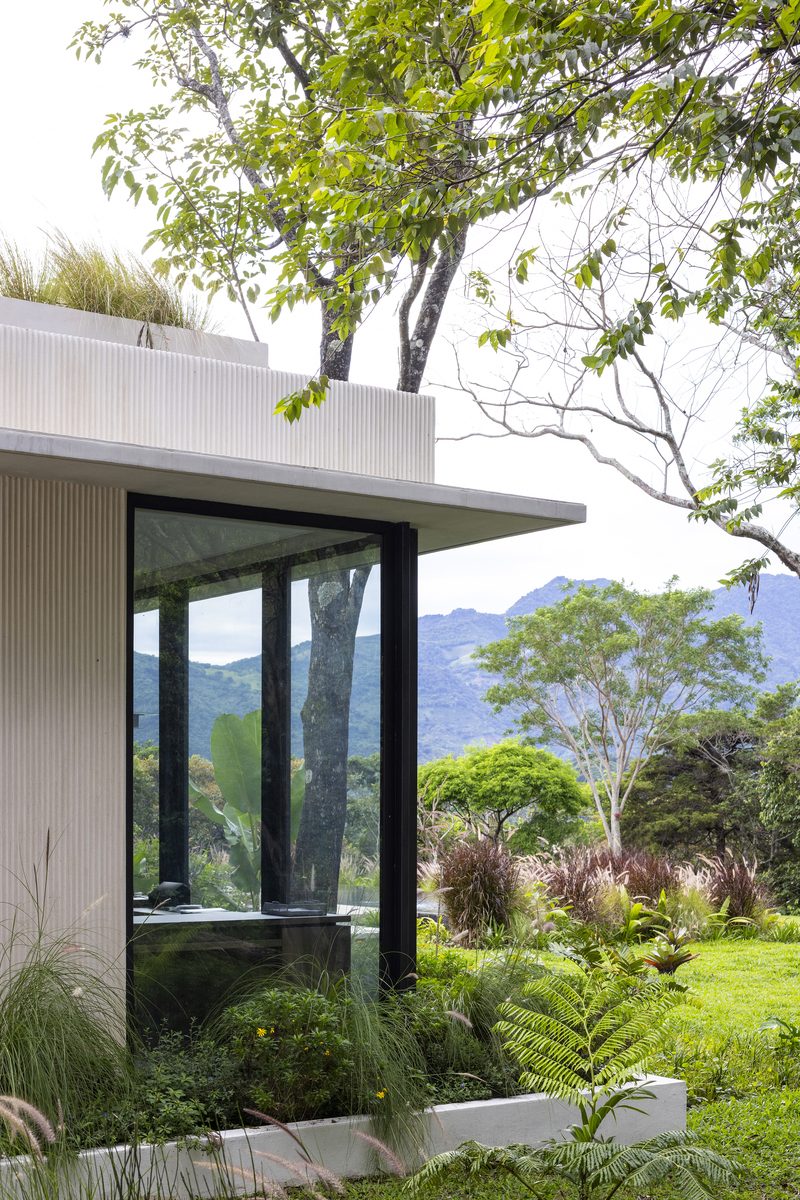
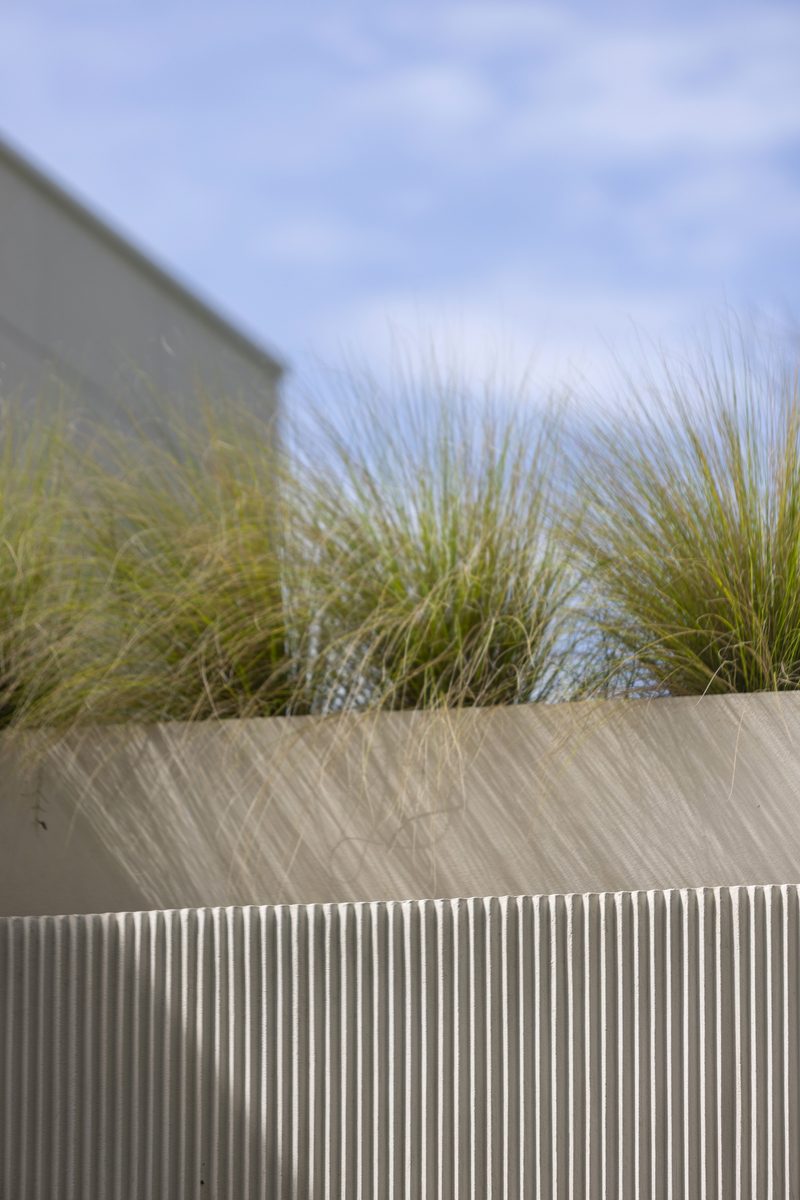
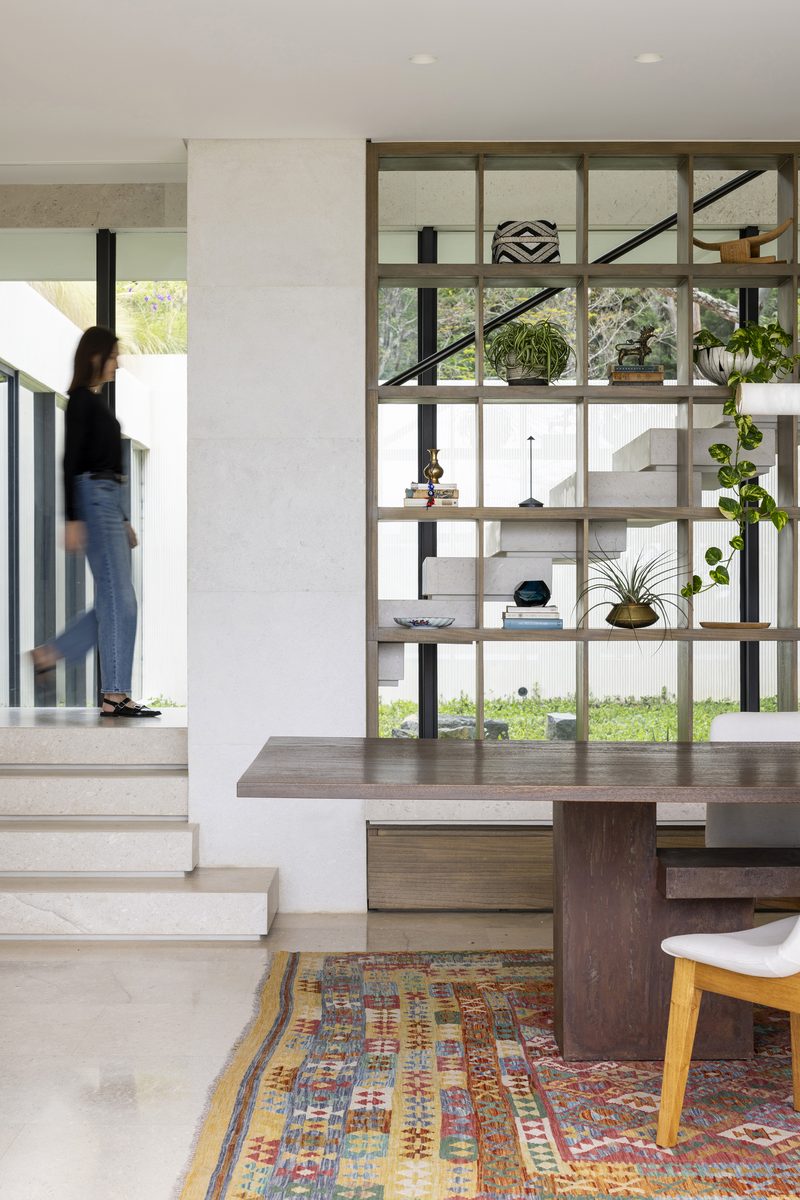
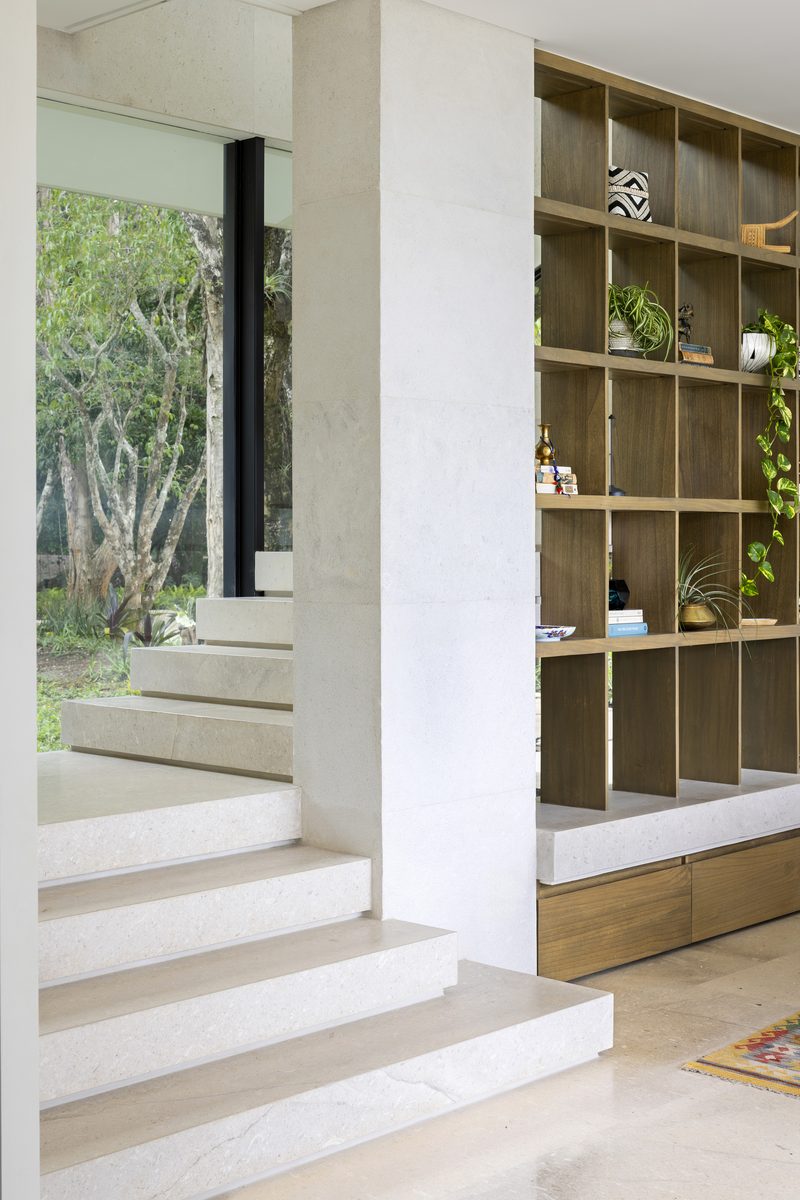
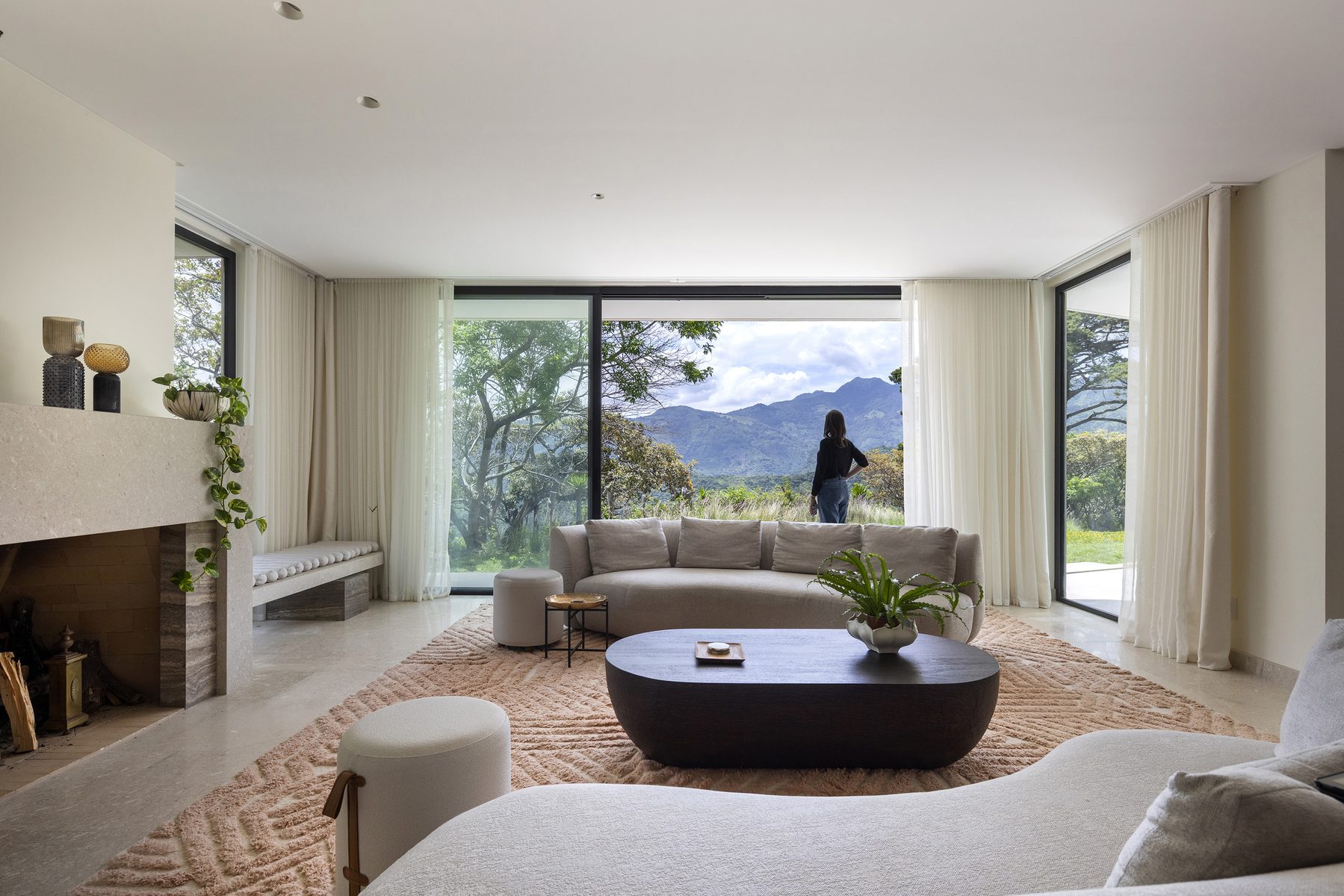
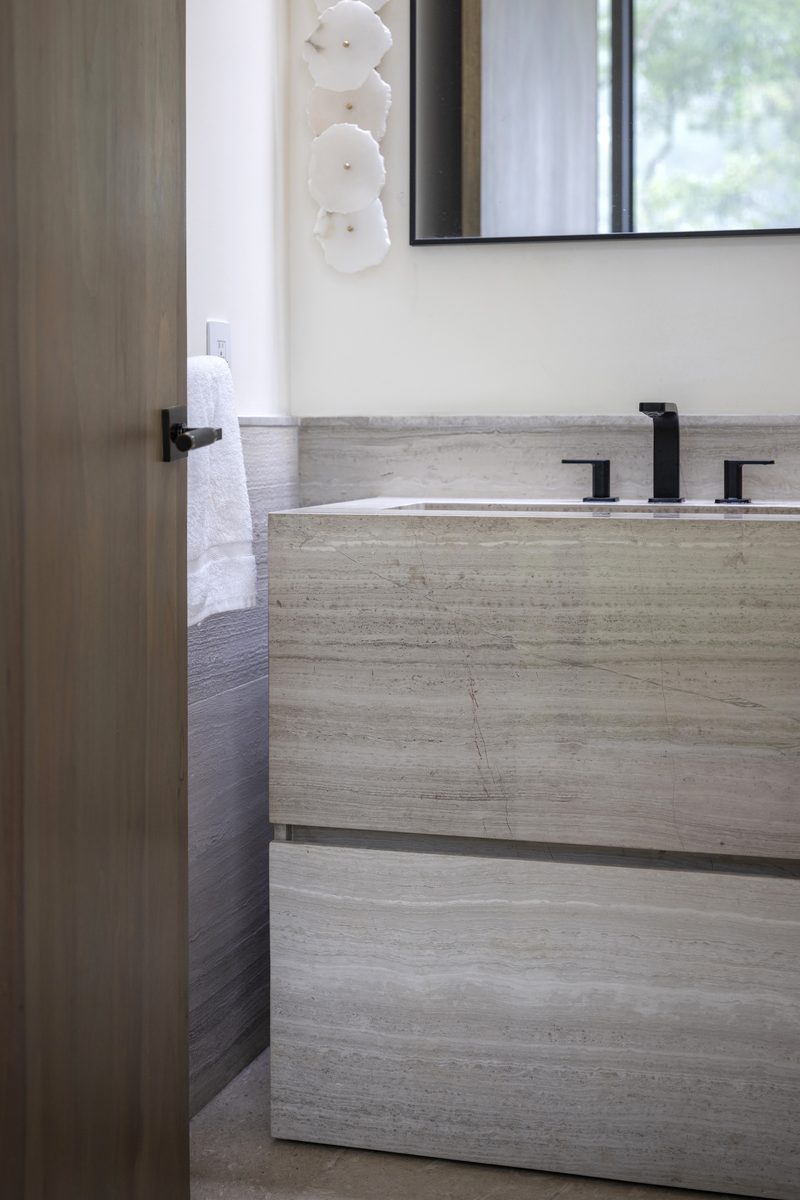
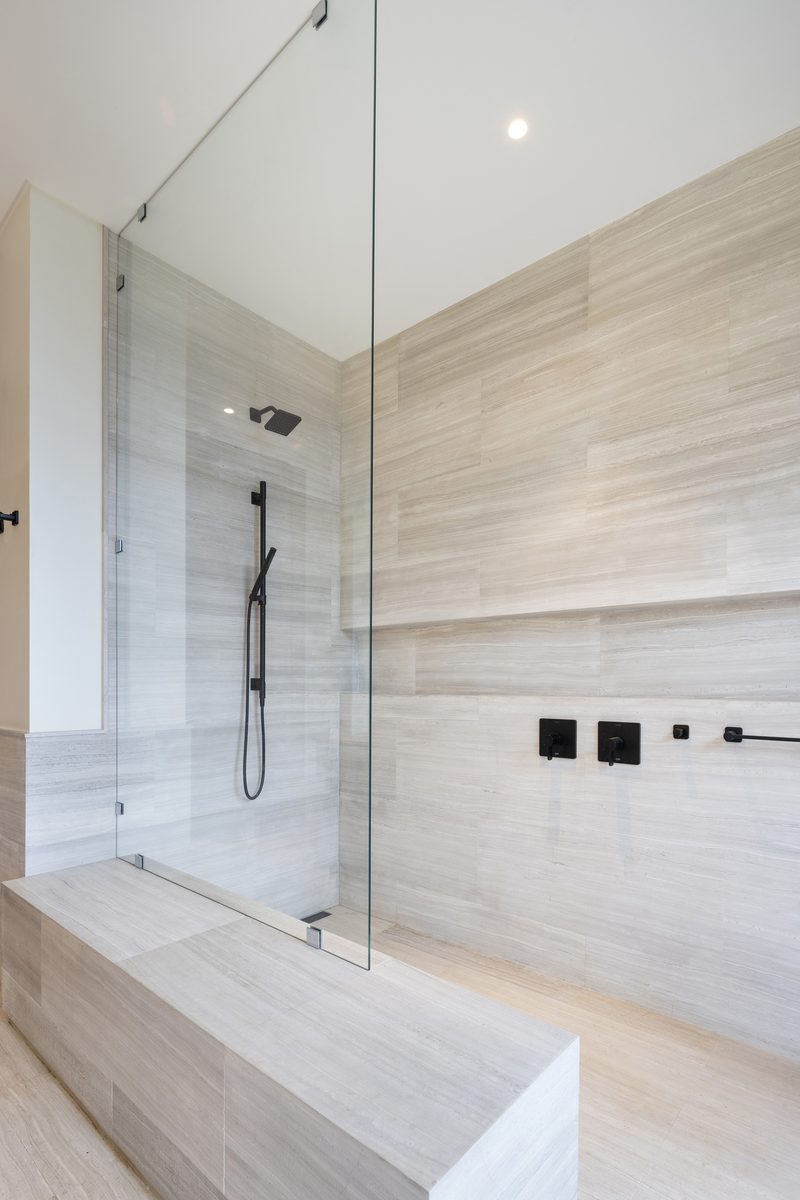
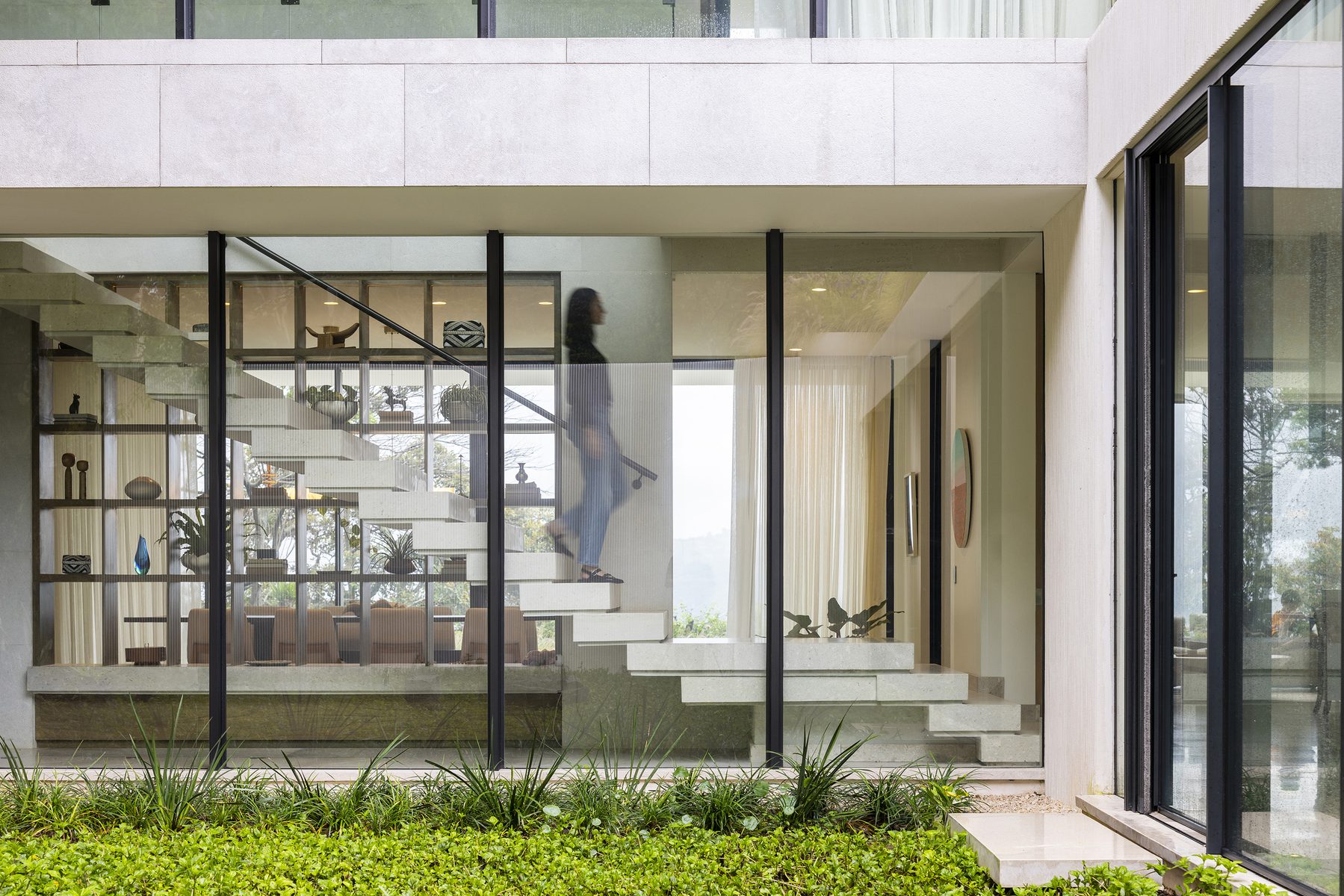
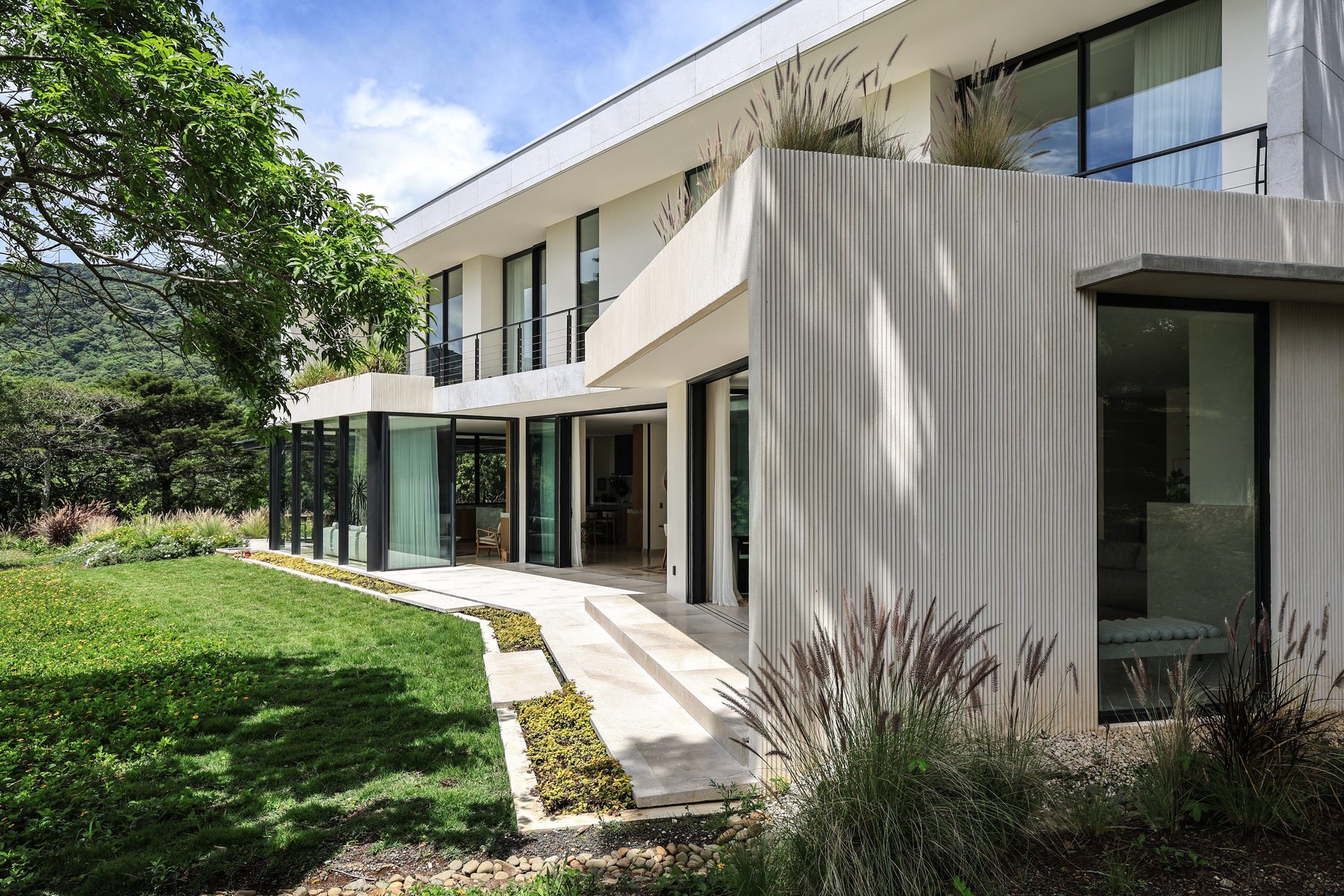
The exterior is clad in a combination of limestone tile and a vertically striated concrete finish on the lower volumes — the texture distinguishing and defining the two levels. Inside, lower-level floors are natural stone and bedroom floors are engineered timber. The main stair is a prominent interior feature, set between a floor-to-ceiling timber bookcase on one side and a glass wall on the other that looks directly onto the courtyard tree. The treads are clad in limestone and detailed to read as floating stacked planes. Interior spaces carry continuous 3-metre ceilings throughout, and doors are full height with no top frame, allowing the ceiling plane to flow uninterrupted from room to room. All cabinetry, doors, and kitchen joinery are solid Laurel wood, finished to sit in harmony with the natural stone palette of the home. Bathrooms use natural stone and ceramics throughout, and several incorporate electronically switchable glass for privacy. The guest bathroom is lit by a wall-to-wall slot skylight that penetrates the green roof above, flooding the room with natural light. The main living room centres on large bookshelves, circular sofas arranged for communal gathering, and a wood-burning fireplace for the cooler months of December and January.
The landscape strategy worked with the site's pre-existing flora rather than against it, reinforcing the sense that the house has settled into a setting that was already there. A network of paths and trails connects the main house to other areas of the lot, including a detached elevated room with views to the north — a quiet retreat from the life of the main home.
The design grew from extended sessions with the owners and family — understanding how they live, how they entertain, how they move through a day, and how they wanted the home to support all of that as the family grows. Inverse worked closely with the interior designer throughout to ensure architecture and interiors read as a single conceived whole. The result is bespoke in the fullest sense: shaped entirely by the people who inhabit it.
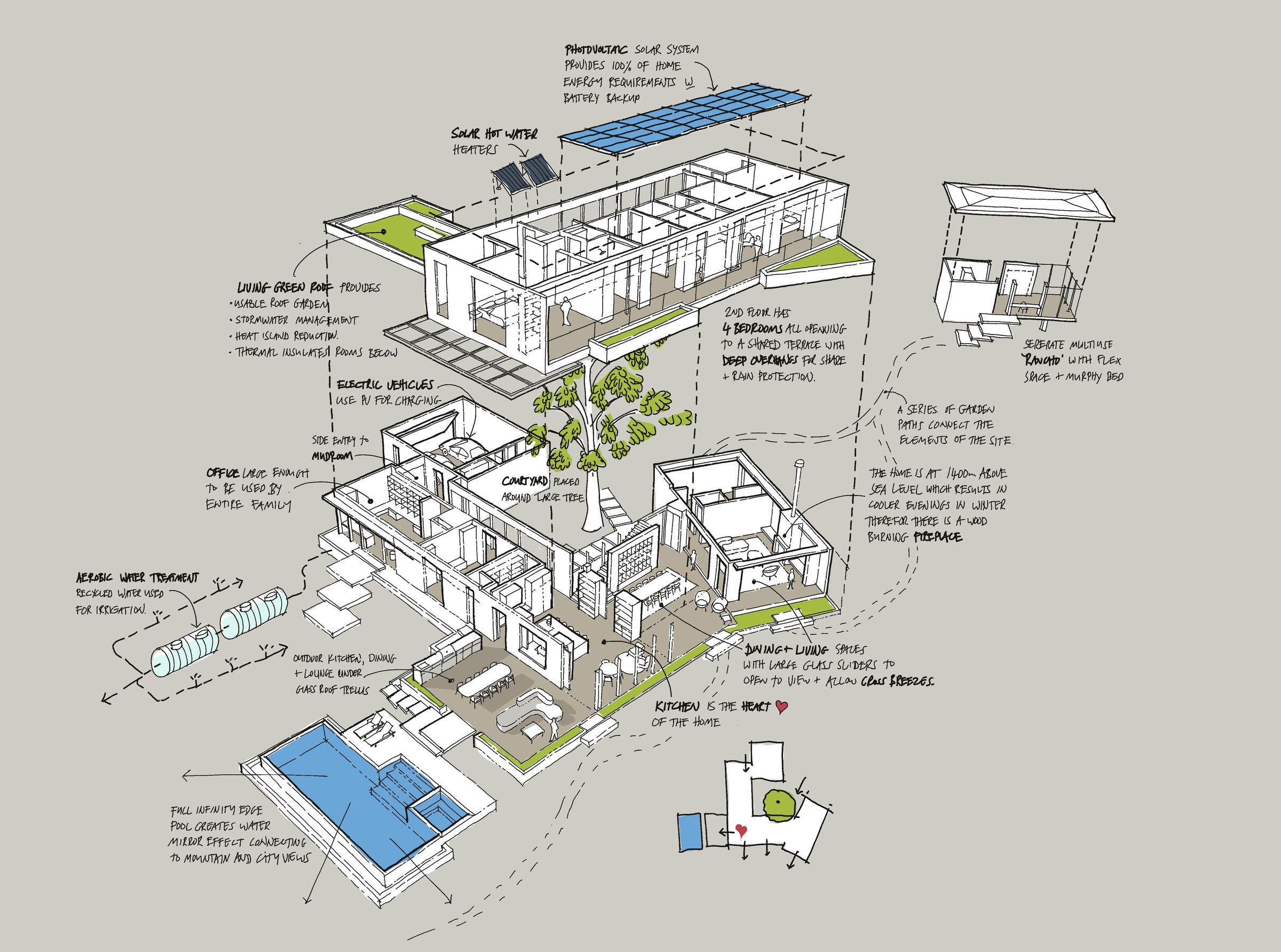
Conceptual Massing · Axonometric